Bias in AI Algorithms: How to Audit Your Models for Fair Business Practices
Bias in AI Algorithms: Discover how to audit AI algorithms for bias using the MAI-BIAS toolkit, peer-induced fairness frameworks, and continuous compliance monitoring. Learn to implement fair business practices that meet regulatory standards.
The $4.6 Billion Cost of Algorithmic Bias
In 2026, bias in AI is no longer just an ethical concern—it is a financial liability. The TRUMP AMERICA AI Act, introduced in March 2026, requires every provider of a high-risk AI system to conduct an annual independent third-party audit to detect viewpoint discrimination or discrimination based on political affiliation . The EU AI Act, effective since August 2024, imposes stringent requirements on high-risk applications like credit scoring systems, mandating rigorous identification and mitigation of discrimination risks .
The stakes are staggering. Burnout-driven turnover costs an estimated $4.6 billion annually in the United States from physician turnover alone—and that is just one industry. For financial services, where 91% of firms are now adopting AI for core operations, the risk of discriminatory outcomes has never been higher .

Yet despite regulatory pressure, many organizations remain vulnerable. A key vulnerability stems from the fact that global fairness metrics, such as Disparate Impact or Demographic Parity, are estimated on test samples and therefore depend on the audited data distribution . This creates a dangerous loophole: malicious actors can construct fairness-compliant yet non-representative samples that appear compliant while masking discriminatory behavior—a practice known as “fairwashing” .
This guide provides a comprehensive framework for auditing AI models for bias, from open-source toolkits to causal fairness frameworks and continuous compliance strategies.
The Regulatory Landscape: What You Need to Know in 2026
United States: The TRUMP AMERICA AI Act
The TRUMP AMERICA AI Act (The Republic Unifying Meritocratic Performance Advancing Machine Intelligence by Eliminating Regulatory Interstate Chaos Across American Industry Act) is a massive 291-page bill that establishes the first comprehensive federal framework for AI regulation .
Key provisions for bias auditing include:
| Requirement | Implication |
|---|---|
| Annual third-party bias audit | High-risk AI systems must undergo independent fairness assessment yearly |
| Federal products liability framework | Developers can be held liable for harm caused by defective design or failure to warn |
| Ethics training requirement | All personnel using covered AI must complete FTC-established ethics curriculum |
| Private right of action | Individuals can sue for AI discrimination |
The bill also creates a risk-based framework: systems trained using more than 10²⁶ integer or floating-point operations must participate in the Advanced Artificial Intelligence Evaluation Program within the Department of Energy .
European Union: The EU AI Act
The EU AI Act, effective from 1 August 2024, represents the world’s first comprehensive legal framework for AI. For high-risk AI applications such as credit scoring systems, the Act requires :
- Rigorous identification and mitigation of discrimination risks
- Thorough assessments both prior to deployment and continuously throughout the operational life cycle
- Sustained compliance with transparency and fairness standards
Article 9 requires providers to implement a comprehensive risk management system that identifies, analyzes, and evaluates risks related to the system’s intended use .
United Kingdom: FRC Guidance on Generative AI in Audits
The UK’s Financial Reporting Council published guidance on 30 March 2026—the first from any audit regulator globally—outlining how audit firms can manage risks while leveraging generative and agentic AI tools .
Critical principle: “Regulatory accountability for the deployment of AI tools and the quality of audit outputs remains unchanged. As set out in auditing standards, the human auditor is always accountable—this guidance does not alter that position” .
OECD Due Diligence Guidance
The newly released OECD guidance provides a roadmap for AI governance structured around a six-step framework :
- Policy framework and management systems — Establish foundational policies reflecting fairness, non-discrimination, transparency, and accountability
- Risk identification and assessment — Conduct comprehensive risk scoping with stakeholder engagement
- Risk prevention and mitigation — Implement responsible data practices and ensure transparency
- Tracking and monitoring — Establish ongoing testing, evaluation, and incident documentation
- External and internal communication — Develop audience-appropriate disclosures
- Remediation planning and mechanisms — Create pathways for addressing issues
Understanding Bias in AI Systems
Where Bias Enters the Pipeline
Biases in AI systems can arise through diverse channels :
| Source | Description | Example |
|---|---|---|
| Real-world data bias | Training data reflects existing societal biases | Hiring model learns historical discrimination |
| Technical/algorithmic bias | Design choices favor certain values while neglecting others | Feature selection that proxies for protected attributes |
| Algorithmic correlation errors | Deep learning discovers spurious correlations | Zip code becoming proxy for race |
Deep neural networks are designed in a manner that prevents complete understanding by developers and stakeholders. The intricacies of how they discover correlations are not entirely comprehensible by humans .
Types of Discrimination
AI decisions can result in multiple forms of discrimination :
- Direct discrimination: Decisions explicitly based on protected attributes (gender, race, class)
- Indirect discrimination: Seemingly neutral attributes (zip code) that have concealed consequences for protected groups
The Disparate Impact Metric
The most common operationalization of fairness in US regulation is the Disparate Impact (DI) ratio, which evaluates whether the decision of an algorithm depends on sensitive attributes :
DI(f, ℙ) = min(P(Ŷ=1|S=0), P(Ŷ=1|S=1)) / max(P(Ŷ=1|S=0), P(Ŷ=1|S=1))A DI ratio of 1 indicates perfect statistical parity—no relationship between model outcomes and the sensitive variable. Several norms and regulations impose that a model should have its disparate impact ratio greater than a given level t, often set to t = 0.8 . This threshold is supported by EEOC guidelines and case law (e.g., Griggs v. Duke Power Co., 401 U.S. 424 (1971)) .
The Audit Vulnerability: How Fairwashing Works
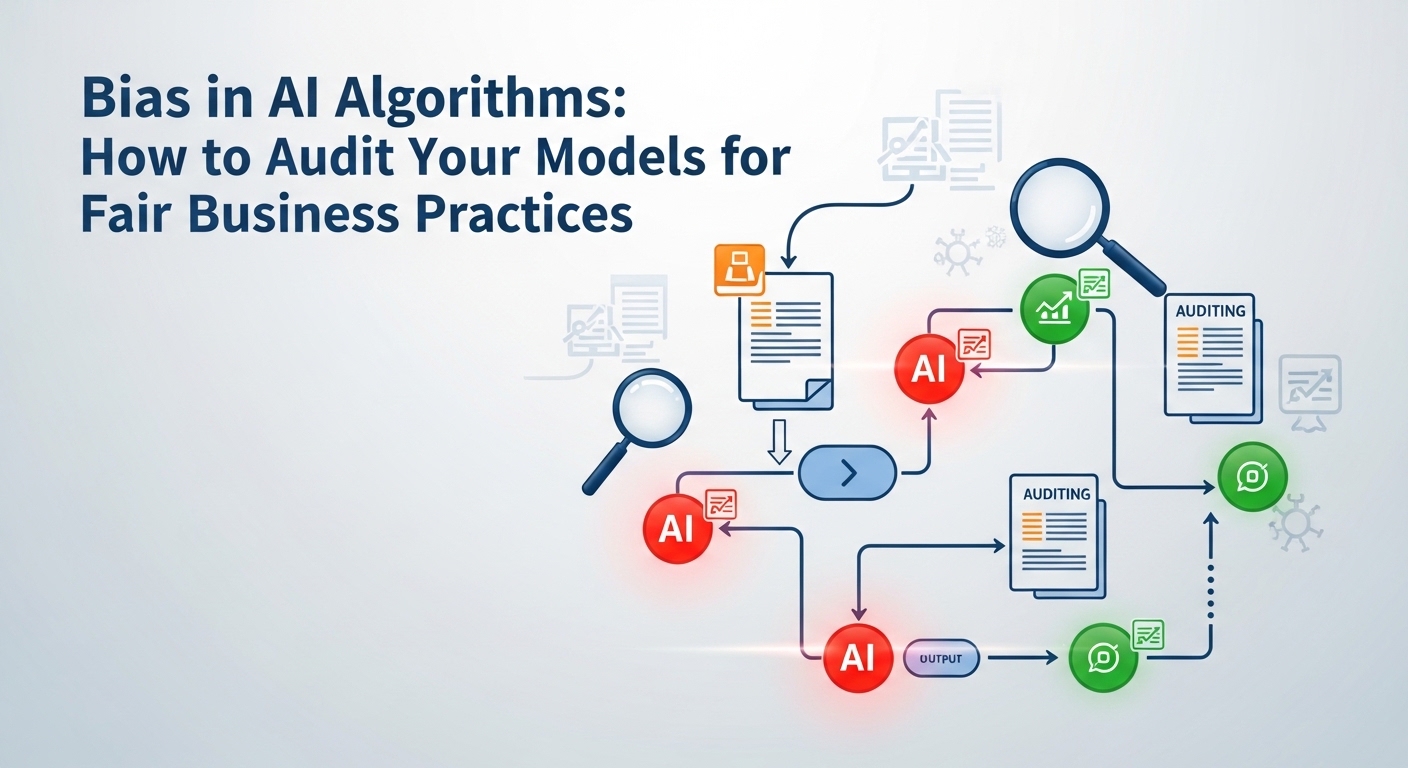
One of the most critical insights from recent research is that fairness audits are vulnerable to manipulation . The audit process involves three entities:
| Entity | Role | Access |
|---|---|---|
| Auditee | Product owner holding full dataset and trained predictor | Full data |
| Auditor | External entity computing fairness metrics | Subset provided by auditee |
| Supervisory authority | Regulator or court with enforcement power | Full data |
The vulnerability: The auditee chooses which subset of data to provide to the auditor. A malicious auditee can construct a fairness-compliant yet representative-looking sample from a non-compliant original distribution, creating an “illusion of fairness” .
This is analogous to the Volkswagen emissions scandal, where vehicles were engineered to detect auditing conditions and deceive regulators by temporarily producing compliant behavior .
The mathematical formulation: The malicious auditee solves:
argmin_{P∈𝒫(E), DI(f,P)≥t} d(P, Qn)They seek the distribution P that is as close as possible to the original data distribution Qn while satisfying the fairness constraint .
Detecting Manipulation
To counter such attacks, supervisory authorities can use distributional distance-based statistical tests to evaluate whether a submitted sample is representative of the full dataset. The research characterizes the minimal distributional shift required to satisfy fairness constraints and provides practical guidelines for strengthening supervisory verification .
Tools for Auditing AI Bias
MAI-BIAS Toolkit
The MAI-BIAS toolkit is an open-source solution for AI fairness analysis, first created by the MAMMOth project. It aims to cover the needs of both computer scientists and auditors by bringing together existing and novel software solutions for AI bias detection and mitigation in a uniform interface .
Key features:
- Can be installed as a local runner or remote access tool
- Includes 40+ intra-organization module contributions
- Supports various kinds of fairness analysis, trustworthiness analysis, and bias mitigation recommendations
- Handles dataset and model loading
Quickstart:
python --version  # Ensure Python 3.11
pip install mai-bias
python -m mai_bias.app
The toolkit creates helper files that store run outcomes and cache data to minimize internet usage .
Important note: Each type of analysis checks for different considerations and provides different insights. Not all analysis methods—and not even all results in each one—are relevant in every application context, because there will always be some bias. The question is which are considered discriminatory or harmful. Deciding on unfair biases should be part of an interdisciplinary and multi-stakeholder negotiation process .
AI Model Governance & Fairness Analysis Tool
A comprehensive open-source tool available on GitHub provides bias detection, privacy analysis, and governance compliance for machine learning models .
Bias detection capabilities:
| Metric | What It Measures |
|---|---|
| Demographic parity | Equal positive outcome rates across groups |
| Equalized odds | Equal error rates across groups |
| Equal opportunity | Equal true positive rates across groups |
| Intersectional analysis | Bias across multiple sensitive attributes |
Technical stack: Built on Fairlearn (Microsoft’s fairness toolkit), SHAP, LIME, and Scikit-learn. Provides interactive visualizations using Plotly .
Peer-Induced Fairness Framework
The peer-induced fairness framework, proposed by researchers at the University of Edinburgh, combines counterfactual fairness with peer comparison strategy .
What makes it unique:
- Universality: Adaptable to datasets with different characteristics, including highly skewed distributions
- Transparency: Provides clear explanations through peer comparisons
- Causal approach: Addresses the limitations of traditional static fairness metrics
Key insight: “When an individual’s treatment is consistent with that of their peer group, perceptions of bias tend to diminish” .
Real-world application: In testing SME access to finance, the framework uncovered that 41.51% of micro-firms face discrimination compared to non-micro firms .
GAN-Based Debiasing
A novel approach using Generative Adversarial Networks (GANs) has been proposed to mitigate biases inherent in AI-assisted decision-making .
How it works: Two distinct deep neural networks work together—the generator functions as the decision-maker, while the discriminator undertakes the role of supervisor to ensure impartial decision-making .
Advantage: Unlike approaches centered on partial explainability, this model uses a machine for supervising the debiasing procedure, possessing the capability to identify and rectify unfavorable correlations .
The Shift from Point-in-Time to Living Compliance
Traditional governance relies on “point-in-time” audits—a review is conducted, a box is checked, and the model is deployed. But in an era where AI agents can iterate, adapt, or drift across complex workflows in real-time, an audit conducted last Tuesday is an obsolete safety measure by Wednesday morning .
Why Manual Oversight Fails
The “human-in-the-loop” fallacy claims that keeping people involved in AI decisions will make systems more accurate and reliable. However, when an AI system executes thousands of micro-decisions per second, the human becomes a bottleneck rather than a safeguard .
The Automation Mandate
To bridge this gap, organizations must transition to “living compliance”—a fundamental architectural philosophy where governance is treated as a continuous, real-time data stream rather than a periodic manual event .
The three pillars of automated assurance:
| Pillar | Description |
|---|---|
| Automated Regulatory Synchronisation | Real-time synchronization of internal lifecycles with external regulatory calendars |
| Integrated Compliance Engines | Compliance requirements programmatically baked into the system itself |
| Continuous Monitoring | Every action verified as it occurs |
Algorithmic Accountability and Fiduciary Duty
For board directors, the shift toward agentic AI carries significant implications regarding personal liability and fiduciary duties. Under Section 172 of the UK Companies Act, directors must act in a way that promotes the success of the company while maintaining high standards of business conduct. In an automated world, a “black box” defense is no longer legally viable .
The solution: Implement automated governance frameworks that ensure every autonomous decision is logged with a “reasoning trace”—an industry-standard audit trail that records the step-by-step logic an AI followed to reach a specific conclusion .
LLM-Specific Bias: The Spurious Context Problem
Large language models present unique bias challenges. Research using the largest publicly available dataset of U.S. classroom transcripts (NCTE) found that irrelevant contextual information can shift model predictions by up to 1.48 points on a 7-point scale, with larger models sometimes exhibiting greater sensitivity despite higher predictive accuracy .
The finding: Robustness to spurious context is not a natural byproduct of model scaling.
The solution: Debiasing-DPO, a self-supervised training method that pairs neutral reasoning with the model’s biased reasoning, reduces bias by 84% and improves predictive accuracy by 52% on average .
Practical Audit Framework: A Step-by-Step Guide
Step 1: Establish Your Governance Foundation
Based on the OECD guidance, begin by establishing foundational policies that reflect core principles: human-centered AI, fairness and non-discrimination, transparency and explainability, robustness, security, safety, and accountability .
Step 2: Select Your Fairness Metric
Choose appropriate fairness criteria based on your use case:
| Use Case | Recommended Metric |
|---|---|
| Hiring (US compliance) | Disparate Impact (target ≥ 0.8) |
| Credit scoring (EU AI Act) | Multiple metrics + causal framework |
| General classification | Demographic parity + equalized odds |
Step 3: Run Baseline Audits Using Open-Source Tools
Use MAI-BIAS or the AI Model Governance tool to establish baseline fairness metrics across your protected attributes .
Step 4: Test for Fairwashing Vulnerability
Apply the distributional distance tests described in the auditing literature to ensure your evaluation sample is representative of the full data distribution .
Step 5: Implement Continuous Monitoring
Transition from point-in-time to living compliance. As Vikram Singh notes: “Instead of waiting for a manual auditor to find a mistake after it has happened, this approach builds the ‘audit’ directly into the technology so that every action is verified as it occurs” .
Step 6: Document Everything
Create a clear audit trail that includes:
- Model version and training data
- Fairness metrics at each evaluation point
- Mitigation steps taken
- Reasoning traces for significant decisions
Step 7: Schedule Regular Third-Party Audits
For high-risk AI systems, comply with the TRUMP AMERICA AI Act’s requirement for annual independent third-party audits .
Common Pitfalls to Avoid
| Pitfall | Why It’s Dangerous | Solution |
|---|---|---|
| Assuming balanced data | Real-world data is often skewed; fairness metrics become unreliable | Use frameworks designed for imbalanced data |
| Relying only on point-in-time audits | Model drift occurs between audits | Implement continuous monitoring |
| Treating all fairness metrics equally | Different metrics capture different types of bias | Select metrics based on your specific use case |
| Ignoring intersectionality | Bias may affect subgroups differently | Conduct intersectional analysis |
| Black-box defense | “The algorithm is too complex to explain” is no longer legally viable | Implement reasoning traces |
The Future of AI Fairness Auditing
By 2028, expect three major shifts:
1. Mandatory continuous monitoring. Regulators will require real-time compliance for high-frequency systems .
2. Causal fairness as standard. Static metrics will be supplemented by causal frameworks like peer-induced fairness .
3. Automated regulatory synchronization. AI systems will update their compliance parameters automatically when regulations change .
Frequently Asked Questions
Q: How often should I audit my AI models for bias?
A: For high-risk AI systems, the TRUMP AMERICA AI Act requires annual independent third-party audits. However, best practice is continuous monitoring for any system that updates frequently .
Q: What is the acceptable Disparate Impact threshold?
A: The common threshold is t = 0.8 (the “80% rule”), supported by EEOC guidelines and case law .
Q: Can I audit my own models internally?
A: Yes, for internal development. However, the TRUMP AMERICA AI Act requires independent third-party audits for compliance certification .
Q: What if my data is imbalanced across protected groups?
A: Use fairness frameworks specifically designed for imbalanced data, such as the peer-induced fairness framework, which accounts for skewed distributions .
Q: Are LLMs more biased than traditional ML models?
A: LLMs present unique challenges, particularly sensitivity to spurious social context. However, techniques like Debiasing-DPO can reduce bias by 84% while improving accuracy .