NPC Architects: When Generative AI Starts Drafting the Real World
NPC Architects: When Generative AI Starts Drafting the Real World What happens when generative AI architecture and urban planning escape the video game world? Explore how NPC-like algorithms are designing buildings, cities, and infrastructure—and what it means for human architects.
Introduction: The Algorithm Behind the Blueprint
In video games, Non-Player Characters (NPCs) follow scripts. They walk predetermined paths, speak predetermined lines, and react to players within predictable boundaries. They are not conscious. They are not creative. They are simply following rules.
For decades, that was also the limit of artificial intelligence in design.
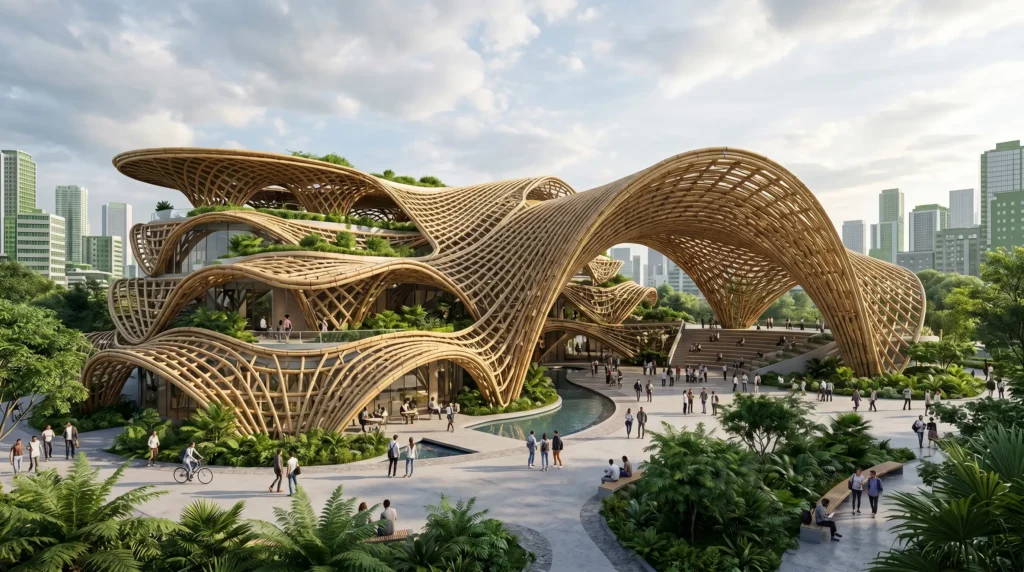
But something has changed. Generative AI—the same technology that powers ChatGPT, Midjourney, and DALL-E—has broken out of the chat window and into the drafting room. Today, algorithms are not just assisting architects. They are proposing designs. They are generating floor plans, optimizing structural systems, and even laying out entire neighborhoods.
We have entered the era of the NPC architect—an AI that behaves like a tireless, infinitely creative, and occasionally baffling design assistant. Unlike a human architect, it never sleeps. Unlike a junior designer, it never complains. Unlike a traditional computer program, it does not simply execute commands. It imagines.
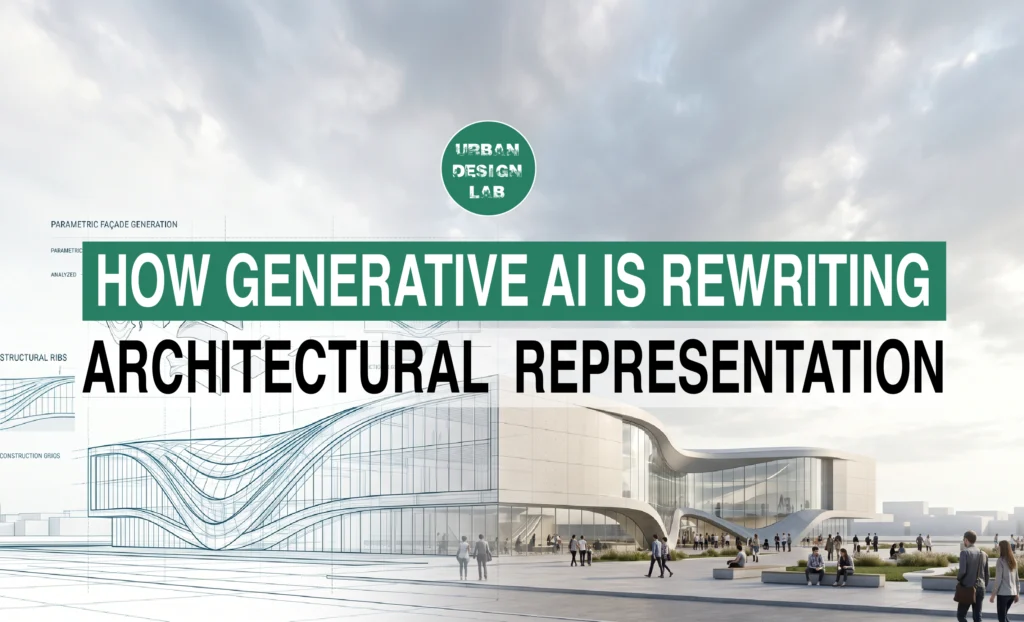
In this article, we will explore how generative AI architecture and urban planning is transforming the built environment. We will examine the tools, the triumphs, the failures, and the profound questions raised when machines start drafting the real world.
Part 1: From Procedural Generation to Generative Design
1.1 What Video Games Taught Us
Long before ChatGPT existed, video game developers were already using AI to build worlds. Minecraft generates infinite terrain. No Man’s Sky creates 18 quintillion planets. Diablo arranges dungeons so that no two playthroughs are identical.
This technique is called procedural generation. The game designer writes a set of rules—”mountains form near coastlines,” “treasure rooms spawn three corridors away from the entrance”—and the algorithm executes them, producing endless variations within constraints.
Procedural generation is fast. It is efficient. But it is not intelligent. The algorithm follows rules blindly, producing results that are sometimes brilliant and sometimes nonsensical.
Generative AI is the upgrade. Instead of following hardcoded rules, generative models learn from thousands or millions of examples. A generative AI trained on floor plans does not need to be told that kitchens belong near dining rooms. It learns that pattern from the data. It can then produce entirely new floor plans that respect the same implicit rules—and sometimes break them in surprisingly creative ways.
1.2 The Leap to Real-World Design
The transition from game worlds to real buildings is not as large as it seems. A game level is a constrained three-dimensional space with functional requirements: paths, rooms, sightlines, cover. A building is a constrained three-dimensional space with functional requirements: circulation, adjacency, light, structure.
The same algorithms that generate a Doom level can, with modification, generate a hospital wing.
Researchers have already demonstrated this. A 2023 project used a generative adversarial network (GAN) trained on thousands of apartment floor plans. The AI learned to produce layouts that were indistinguishable from human-designed plans—and sometimes more efficient in terms of circulation and daylight access.
Part 2: The Tools of the NPC Architect
2.1 Generative Adversarial Networks (GANs)
GANs work like a forger and a detective locked in competition. One neural network (the generator) produces fake designs. Another (the discriminator) tries to spot the fakes. They train together, pushing each other to improve.
When applied to architecture, GANs learn the deep statistical patterns of good design. They understand that windows should not face interior walls, that corridors should connect to rooms, that structural grids should be regular.
Example: Researchers at MIT trained a GAN on 100,000 building footprints. The AI learned to complete partial footprints plausibly—adding rooms, connecting corridors, respecting property lines. Urban planners now use similar tools to rapidly prototype neighborhood layouts.
2.2 Reinforcement Learning (RL)
If GANs are about learning patterns, reinforcement learning is about learning goals. An RL agent is given an objective—”maximize natural light,” “minimize energy use,” “keep circulation paths under 50 meters”—and then tries millions of design variations to find the best solution.
RL is particularly powerful for performance-based design. An AI can generate a thousand facade variations, simulate the sunlight exposure for each, and select the top performers. A human architect would take months. The AI takes hours.
Example: Autodesk’s Project Dreamcatcher uses RL to generate optimized chair designs, bridge trusses, and building envelopes. The human sets the constraints (weight, strength, material cost). The AI explores the design space and returns thousands of viable options.
2.3 Large Language Models (LLMs) for Code Compliance
Here is a surprising application: building codes. A typical commercial building must comply with thousands of regulations covering safety, accessibility, energy efficiency, and fire resistance. Checking a design manually is tedious and error-prone.
LLMs like GPT-4, fine-tuned on building codes, can now review designs automatically. Given a floor plan and a set of specifications, the AI flags potential violations: “This corridor is 36 inches wide, but accessible routes require 48 inches.” “This stairwell lacks a required fire-rated door.”
The AI is not replacing the code official. It is acting as a tireless junior reviewer, catching errors before they become expensive change orders.
Part 3: Case Studies – When NPCs Build Real Cities
Case Study 1: Sidewalk Toronto (Proposed)
Before its cancellation, Sidewalk Labs’ Quayside project in Toronto was the most ambitious attempt to apply generative AI to urban planning. The proposal included a “digital master plan” that would evolve over time. As residents moved in and data accumulated, an AI would propose adjustments: moving a crosswalk here, adding a bench there, converting a parking lane into a bike path.
The project raised profound privacy concerns—hence its demise—but the technical vision was sound. Generative AI can treat a neighborhood as a living organism, adapting continuously to how people actually use it.
Case Study 2: Spacemaker AI (Now Part of Autodesk)
Spacemaker AI, acquired by Autodesk in 2020, is a generative design tool for building sites. A developer inputs the property boundaries, desired square footage, parking requirements, and sunlight constraints. The AI generates thousands of possible building massings, optimizing for views, noise reduction, and solar exposure.
A human architect then selects the most promising options and refines them. The AI does not replace the architect—it amplifies them.
Case Study 3: The AI-Generated High-Rise (Zaha Hadid Architects)
Zaha Hadid Architects, already famous for its futuristic, algorithmic forms, has integrated generative AI into its workflow. In a recent competition entry, an AI generated the building’s structural core—optimizing elevator placement, stairwell locations, and mechanical shafts simultaneously. The result was a 15% reduction in core square footage, freeing more area for rentable office space.
The AI did not design the building’s iconic curves. That remained the human’s domain. But it solved the boring, difficult, optimization-heavy problems that consume junior architects’ time.
Part 4: The Benefits – Why We Need NPC Architects
4.1 Speed
A human architect might generate five design options in a week. A generative AI can generate five thousand in an hour. Not all will be good. But the best few can be genuinely innovative—and they arrive far faster than traditional methods allow.
4.2 Exhaustive Exploration
Humans suffer from design fixation. Once we have a promising idea, we tend to refine it rather than abandoning it for a completely different approach. AI has no ego. It will happily generate a thousand radically different designs, then discard 990 of them.
This exhaustive exploration often produces surprising solutions. A human might never think to place the elevator bank on the north side. The AI tries everything and reports back.
4.3 Performance Optimization
Generative AI excels at balancing competing constraints. Maximize daylight. Minimize energy use. Maximize rentable area. Minimize circulation distance. Keep structural costs low. These goals often conflict.
Humans make trade-offs intuitively, but we are not good at finding the true Pareto frontier—the set of designs where no objective can be improved without harming another. AI can find that frontier systematically.
Part 5: The Limitations and Risks
5.1 The “Average” Problem
Generative AI learns from existing designs. If the training data is conservative, the AI will produce conservative outputs. It may never generate a genuinely radical building because it has never seen one.
This is not insurmountable. Researchers can curate training data to include diverse, experimental work. They can also combine generative models with human creativity, using AI for exploration and humans for breakthroughs.
5.2 The Black Box Problem
When a generative AI produces a design, it is not always clear why it chose a particular solution. The internal calculations are complex, nonlinear, and opaque. For a client or regulator demanding an explanation, “the AI decided” is not acceptable.
Explainable AI (XAI) is an active research area. Some progress has been made, but fully transparent generative design remains a future goal.
5.3 The Liability Question
Who is responsible when an AI-generated design fails? The architect who approved it? The developer who deployed the AI? The software vendor who wrote the code? The AI itself (which has no legal standing)?
These questions are unresolved. As generative AI takes on more design responsibility, liability frameworks will need to evolve.
5.4 The Human Cost
If AI can generate floor plans, what happens to junior architects? What happens to drafters? What happens to the entry-level positions that once served as apprenticeships for the profession?
Some argue that AI will eliminate drudgery and free architects for higher-level creative work. Others fear a hollowed-out profession where only a few senior designers survive. The truth likely lies somewhere in between—but the transition will be painful for many.
Part 6: The NPC Architect in Practice – A Workflow
How does an architectural firm actually use generative AI today? A typical workflow might look like this:
Step 1: Problem Definition
The human architect defines the constraints: site boundaries, program requirements, budget, sustainability targets, local codes.
Step 2: Generative Exploration
The AI generates hundreds or thousands of design options, each optimized for the defined constraints. The architect reviews thumbnails, selecting promising candidates.
Step 3: Interactive Refinement
The architect selects a handful of options and continues the conversation with the AI. “Make this one brighter.” “Reduce circulation here.” “Increase unit count by 10%.” The AI generates variations.
Step 4: Performance Simulation
The AI simulates energy use, structural stress, daylight penetration, and pedestrian flow for the refined options. It identifies trade-offs and potential problems.
Step 5: Human Finalization
The architect takes the best AI-generated options and completes the design manually—adding details, selecting materials, integrating client feedback, and stamping the drawings.
In this workflow, the AI is not the architect. It is the tireless, infinitely patient, slightly eccentric intern who never sleeps.
Conclusion: The NPC Is Not the Lead
The rise of generative AI architecture and urban planning is not the end of the human architect. It is the end of the architect as a sole creator. The future belongs to collaboration—human intuition guided by machine exploration, human values encoded as algorithmic constraints, human judgment selecting from machine-generated options.
The NPC architect cannot look at a site and feel the wind. It cannot understand why a client cries when describing their dream home. It cannot defend a design before a community board with passion and eloquence. It cannot write a poem about the way light falls on a staircase at 4 PM.
But it can generate a thousand floor plans while you sleep. It can find an extra 5% of rentable area that everyone else missed. It can catch a code violation before it becomes a lawsuit.
The NPC architect is not here to replace you. It is here to make you better.
The only question is whether you are ready to work with it.
Frequently Asked Questions (FAQ)
What is generative AI in architecture?
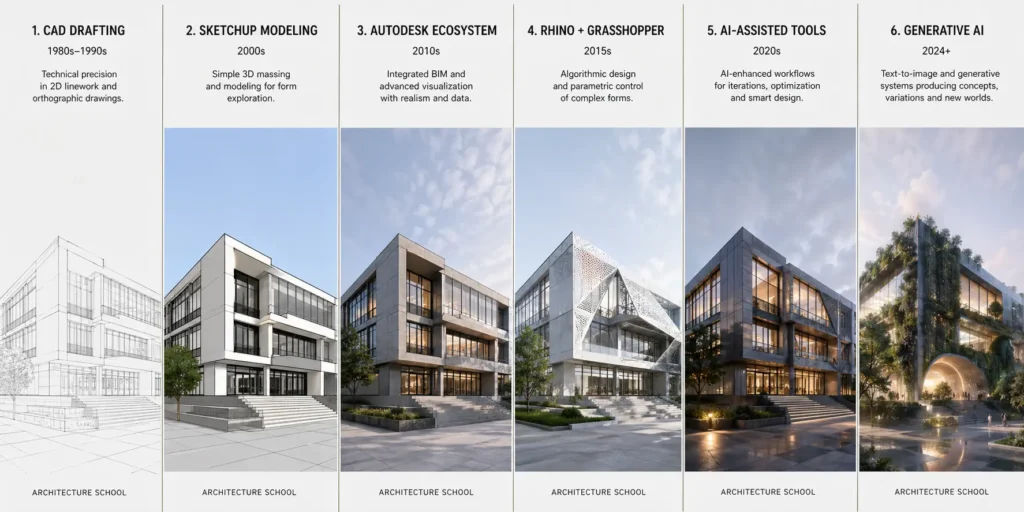
Generative AI refers to machine learning models that can produce novel designs—floor plans, building masses, structural systems—based on training data and user-defined constraints. Unlike traditional CAD, generative AI creates rather than merely documents.
Will AI replace architects?
No. AI excels at optimization and exploration but lacks the contextual understanding, ethical judgment, and creative intuition required for architectural leadership. The likely future is human-AI collaboration.
What is the difference between procedural generation and generative AI?
Procedural generation follows hardcoded rules (e.g., “place a door every 12 feet”). Generative AI learns patterns from data and can produce novel, non-rule-based outputs. Procedural generation is deterministic; generative AI is probabilistic.
How do architects use generative AI today?
Common uses include: site massing studies, floor plan generation, structural optimization, code compliance checking, and energy performance simulation. Tools include Autodesk Forma, Spacemaker, and custom GAN-based workflows.
Is generative AI ethical in urban planning?
Yes, but with caveats. AI-generated plans must be audited for bias (e.g., unfairly prioritizing some neighborhoods over others). Privacy concerns arise when AI uses real-world data. Transparency and human oversight are essential.
Call to Action (CTA)
Are you an architect, urban planner, or designer who has experimented with generative AI? We would love to hear your experiences—the breakthroughs, the failures, the unexpected discoveries. Share your story in the comments below. And if you are a student considering a career in design, learn the tools now. The NPC architect is waiting to be your partner.