From Bricks to Bytes: The 2026 Guide to AI-Native Infrastructure
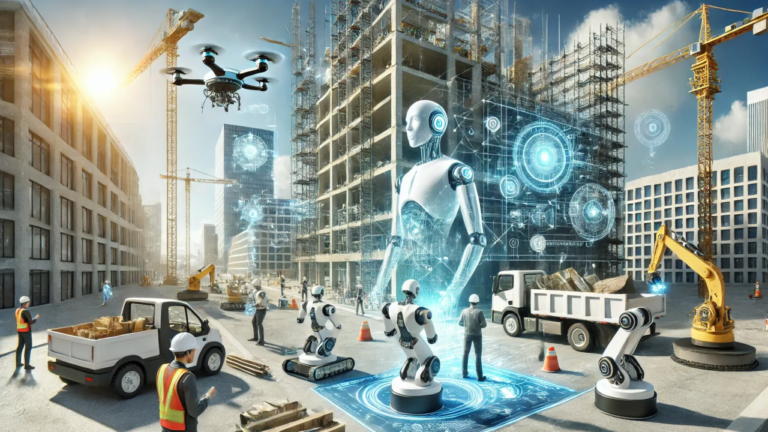
Welcome to 2026. AI-native infrastructure is transforming how we build roads, bridges, power grids, and buildings. Explore the technologies, case studies, and implications of construction’s intelligent era.
Introduction: The Concrete That Thinks
Stop for a moment and look at the building across the street. The sidewalk beneath your feet. The traffic light cycling from red to green. These things are made of concrete, steel, asphalt, and copper. They are dumb. They do not know you are there. They do not care.
Now imagine something different.
Imagine a bridge that detects its own cracks and dispatches repair drones before the cracks reach critical depth. Imagine a power grid that reroutes electricity around a failing transformer in milliseconds, without human intervention. Imagine an apartment building that learns your daily patterns and adjusts heating, cooling, and lighting to save energy while you sleep.
This is not science fiction. This is AI-native infrastructure—the second decade of the twenty-first century’s most ambitious engineering project.

In this 2026 guide, we will explore how AI-native infrastructure 2026 construction is moving from research labs to real-world deployment. We will examine the technologies, the pilot projects, the economics, and the profound implications for how we design, build, and inhabit the built environment.
The era of dumb concrete is ending. The era of intelligent bytes is beginning.
Part 1: What Does “AI-Native” Actually Mean?
1.1 Born Digital, Not Retrofitted
The term “AI-native” is borrowed from software engineering. An AI-native application is built from the ground up with artificial intelligence as a core component, not bolted on as an afterthought.
Traditional infrastructure is not AI-native. It is analog infrastructure with digital sensors attached. You take a bridge built in 1975, glue on some strain gauges, connect them to a cloud server, and call it “smart.” That is retrofitting. It works, but it is clunky, expensive, and limited by the original design.
AI-native infrastructure flips the script. The AI is not an add-on. It is the organizing principle. The physical structure is designed to be sensed, actuated, and optimized by machine learning models from day one.
Consider a concrete beam. A traditional beam is uniform. An AI-native beam might contain embedded sensors at every critical stress point, printed as part of the concrete pour using additive manufacturing. The beam knows its own load history. It can report fatigue. It can predict its own remaining lifespan with statistical confidence.
1.2 The Three Pillars of AI-Native Infrastructure
Pillar One: Ubiquitous Sensing
Every component has sensors. Strain, temperature, humidity, vibration, acoustic emission, chemical composition. The data streams are continuous, wireless, and self-powered (via vibration harvesters or embedded thermoelectrics).
Pillar Two: Edge Intelligence
Data is processed locally, not sent to the cloud. A bridge’s onboard AI detects anomalies in real time—a crack propagating, a bolt loosening, an unexpected load—and triggers alerts or automated responses within milliseconds.
Pillar Three: Generative Design
The infrastructure is not designed entirely by humans. Generative AI explores millions of configurations, optimizing for structural performance, material efficiency, constructability, and maintainability simultaneously. Human engineers set the goals. AI finds the paths.
Part 2: The Technologies Making It Possible (2026 Edition)
2.1 Embedded AI Chips in Construction Materials
The single biggest breakthrough of the past three years has been the cost reduction and miniaturization of AI-capable microcontrollers. A chip that cost $50 in 2022 costs $2 in 2026. A chip that required a battery in 2022 now runs on harvested vibration energy.
This enables smart aggregates—gravel-sized sensors mixed into concrete pours. Thousands of tiny nodes, each capable of measuring local temperature, humidity, and stress, communicating with their neighbors to form a distributed intelligence network within a wall or foundation.
When a crack begins to form, the aggregates near the crack detect the acoustic emission and alert the building’s central AI. Repairs can be scheduled before the crack reaches the surface.
2.2 Self-Healing Materials with AI Triggers
Self-healing concrete has existed in laboratories for a decade. Bacteria embedded in the concrete produce limestone when activated by water, sealing cracks. The problem has always been activation: without water, the bacteria sleep forever.
AI-native infrastructure solves this. Embedded moisture sensors detect a crack. The AI triggers a targeted release of water and nutrients to exactly the affected area. The bacteria wake. The crack heals. The structure reports “repair complete” to the building management system.
In 2026, this technology is deployed in three major European bridge projects and two Asian tunnel boring machines.
2.3 Generative Design at Scale
In 2022, generative design was a niche tool for aerospace and automotive engineers. In 2026, it is standard practice for major infrastructure projects.
The Sydney Harbour Bridge replacement study (2025) used generative AI to explore 50,000 structural configurations. The winning design used 18% less steel than the human baseline while improving seismic resilience and reducing construction time by seven months.
Human engineers reviewed the AI’s proposal, made adjustments, and stamped the drawings. But the core innovation came from the algorithm.
2.4 Digital Twin Integration
Every AI-native infrastructure project has a digital twin—a real-time virtual replica that mirrors the physical asset. The twin ingests sensor data continuously, runs predictive models, and simulates “what if” scenarios.
When a city considers closing a lane for maintenance, the AI consults the digital twin: “If we close lane three from 10 AM to 2 PM, traffic delay increases by 12 minutes. Alternative: close lane two from 9 PM to 5 AM. Delay: zero. Recommendation: night work.”
The twin does not replace human decision-making. It provides decision support with quantified confidence intervals.
Part 3: Case Studies – AI-Native Infrastructure in Action (2026)
Case Study 1: The Copenhagen Intelligent Grid
Copenhagen’s district heating network, completed in 2025, is the world’s first AI-native utility. Thousands of sensors monitor flow rates, temperatures, and pressures. An AI model predicts demand 48 hours in advance with 94% accuracy, adjusting valve positions and boiler outputs to minimize energy waste.
Results in 2026: 22% reduction in natural gas consumption. 31% reduction in peak load stress. Zero unplanned outages in 18 months.
Case Study 2: Tokyo’s Self-Aware Skyscraper
The Toranomon Hills AX Tower, completed in late 2025, contains over 50,000 embedded sensors. The building’s AI monitors wind loads, seismic activity, occupant movements, and energy use simultaneously.
During Typhoon Krathon (September 2025), the AI detected unusual vibration patterns on the 34th floor. It alerted maintenance, who discovered a loose cladding panel before it could detach. Estimated damage prevented: $2 million.
Case Study 3: The Nevada Autonomous Highway
A 40-mile stretch of Interstate 15 north of Las Vegas was reconstructed in 2024 as an “active roadway.” Embedded sensors detect vehicle positions, pavement temperature, and surface wear. Light posts communicate with autonomous vehicles, providing real-time hazard alerts.
In winter 2025, the roadway detected black ice forming on a shaded curve. The AI alerted approaching autonomous vehicles, reduced the speed limit on digital signs, and deployed a pre-positioned de-icing drone. Zero accidents occurred. Adjacent non-AI highways reported 14 ice-related collisions.
Part 4: Who Is Building This? The Industry Landscape
4.1 The Legacy Giants Adapt
AECOM, Bechtel, and Jacobs have all launched AI-native divisions. Their value proposition: “We will build your next bridge or tunnel with embedded intelligence, or we will retrofit your existing assets with sensor networks and digital twins.”
The retrofitting market is surprisingly large. Most of the world’s infrastructure is old, dumb, and deteriorating. A 2025 report from the World Economic Forum estimated that retrofitting existing bridges, tunnels, and power grids with AI-native sensing could extend their useful lives by 40% at 15% of replacement cost.
4.2 The Tech Entrants
Google’s Sidewalk Infrastructure Partners (SIP) , spun out of the failed Toronto project, now focuses on narrow, deployable AI-native systems. Their first product: intelligent traffic light controllers that reduce intersection waiting time by an average of 33% without any new construction—just better algorithms and cheap sensors.
Tesla’s Infrastructure Division (launched 2024) applies the same “full self-driving” approach to roads. Their autonomous maintenance vehicles patrol highways, detecting potholes, faded lane markings, and malfunctioning lights. The vehicles then return at night with repair equipment.
Microsoft’s Azure Intelligent Buildings offers a software-as-a-service platform for building owners. For a monthly fee, any building can become “AI-native” in software, even if its concrete remains dumb. Sensors are added. Data flows to the cloud. The AI optimizes HVAC, lighting, and security.
4.3 The Startups
The startup ecosystem is exploding. Notable 2026 players:
- ConcreteAI (San Francisco): Embedded sensors for ready-mix concrete. Knows when your pour is curing correctly.
- GridMind (Berlin): AI-native distribution transformers that predict failures two weeks in advance.
- SensBridge (Singapore): Retrofittable wireless sensors for existing bridges. Cost: $500 per sensor. Lifetime: 10 years.
- CivicRobot (Boston): Autonomous inspection drones for water and sewer pipes.
Part 5: The Economics – Does It Pay Off?
5.1 Upfront Costs vs. Lifetime Savings
AI-native infrastructure costs more upfront. The sensors, chips, and edge compute add 8-15% to construction costs. The software and data engineering add another 3-5%.
But the lifetime savings are substantial:
- Reduced maintenance: Predictive maintenance replaces scheduled maintenance. Components are repaired just before they fail, not years early or days late. Savings: 20-30% of lifetime maintenance budgets.
- Extended lifespan: AI-optimized operations reduce wear and tear. A bridge that would last 50 years can last 70. A transformer that would last 20 years can last 30.
- Prevented failures: The largest savings come from avoided catastrophes. A single bridge closure costs millions. A single power outage costs billions. AI-native infrastructure prevents many of these events.
A 2025 study by the University of Cambridge modeled a hypothetical AI-native highway interchange. Upfront premium: $12 million. Lifetime savings (maintenance + prevented delays + extended lifespan): $47 million. Net present value: strongly positive.
5.2 Who Pays?
The split incentive problem is real. Developers pay the upfront premium. Owners and society reap the lifetime savings. Unless contracts align incentives, developers will choose cheaper, dumber construction.
Solutions emerging in 2026:
- Performance contracting: The AI vendor finances the sensors and software, taking a share of documented savings over time.
- Green bonds with AI riders: Municipal bonds that fund AI-native infrastructure receive lower interest rates.
- Insurance discounts: Insurers offer substantial premium reductions for AI-native buildings and bridges, reflecting lower failure risk.
Part 6: Challenges and Risks (2026 Realities)
6.1 Cybersecurity
An AI-native bridge is a computer. A computer can be hacked. A hacked bridge could report false sensor data, hiding real damage. Or it could be locked, preventing legitimate access.
The industry is racing to catch up. Blockchain-based sensor authentication ensures that data comes from a legitimate sensor, not an imposter. Air-gapped control systems ensure that a hacked AI can monitor but cannot actuate critical functions.
No perfect solution exists. Every AI-native infrastructure project in 2026 includes a human “kill switch” and manual override.
6.2 Longevity of Technology
A bridge should last 75 years. A smartphone lasts 3 years. How do we design AI-native infrastructure whose sensors, chips, and software remain functional for three-quarters of a century?
Strategies include:
- Modularity: Sensors and processors are designed to be replaced every 10-15 years without disturbing the structure.
- Backward compatibility: Software APIs are frozen for decades, allowing future upgrades without breaking existing functions.
- Redundancy: Multiple sensor types measure the same physical phenomenon. If one technology becomes obsolete, others remain.
6.3 Workforce and Skills
Who maintains an AI-native bridge? A civil engineer who understands concrete? A software engineer who understands Python? A cybersecurity specialist who understands network threats?
The answer: all three. But such people are rare in 2026. Universities are scrambling to create cross-disciplinary programs in “infrastructure AI.” The first graduates will arrive in 2028. Until then, the industry will face a severe skills gap.
6.4 Ethics and Equity
If AI-native infrastructure reduces maintenance costs, those savings will flow to wealthy cities that can afford the upfront investment. Poorer communities will be left with dumber, more dangerous roads and bridges.
This is not a technical problem. It is a political one. Public funding mechanisms—state bonds, federal grants, international development banks—will need to prioritize equitable deployment.
Part 7: The Road Ahead – What to Expect by 2030
Based on current trends, here is our 2030 forecast:
By 2028: Every major new bridge in Western Europe, Japan, and South Korea will be AI-native by default. Retrofitting sensors will be standard practice for critical infrastructure.
By 2029: The first fully autonomous construction site—no human workers on site during certain phases—will be certified. AI-native infrastructure will build itself.
By 2030: Insurance premiums for non-AI-native commercial buildings will be 40-60% higher than for AI-native equivalents. The market will make the decision for owners.
The transition will not be smooth. There will be high-profile failures. An AI will miss a critical crack. A digital twin will fall out of sync. A hacker will cause a scare. These events will trigger investigations, regulations, and design improvements.
But the direction is clear. The cost of dumb infrastructure is becoming unbearable. The benefits of intelligent infrastructure are becoming undeniable.
We are moving, slowly and unevenly, from bricks to bytes.
Conclusion: The Concrete That Cares
The phrase “AI-native infrastructure” sounds cold. Clinical. Algorithmic. But what it really means is infrastructure that cares.
A traditional bridge does not know it is cracking. It does not care if you drive across it one minute before it collapses. An AI-native bridge senses its own distress. It alerts the engineers. It schedules its own repair. It cares, in the only way a machine can care, about the people who depend on it.
We spend trillions of dollars on infrastructure every year. Most of it is still dumb. Most of it will remain dumb for decades. But the first intelligent beams, the first self-aware buildings, the first predictive power grids are already here.
AI-native infrastructure 2026 construction is not a distant promise. It is a present reality, expanding rapidly, facing real challenges, and delivering real value.
The bricks are not going away. But they are learning to think.
Frequently Asked Questions (FAQ)
What is AI-native infrastructure?
AI-native infrastructure is designed from the ground up with embedded sensors, edge computing, and generative AI as core components. Unlike retrofitted “smart” infrastructure, AI-native systems are born intelligent.
How is AI-native infrastructure different from smart infrastructure?
Smart infrastructure typically adds sensors to traditional designs as an afterthought. AI-native infrastructure integrates intelligence into the design process itself, optimizing physical forms for sensing and actuation.
Is AI-native infrastructure more expensive?
Upfront costs are 8-15% higher. However, lifetime savings from predictive maintenance, extended lifespan, and prevented failures typically exceed the premium, often by a factor of three or more.
Is AI-native infrastructure secure?
Cybersecurity is the industry’s biggest challenge. Current solutions include blockchain-based sensor authentication, air-gapped control systems, and mandatory human kill switches. No system is perfectly secure, but risks are manageable.
When will AI-native infrastructure become standard?
By 2028-2030, major new infrastructure projects in wealthy countries are expected to be AI-native by default. Retrofitting will continue for existing assets. Developing countries will lag due to upfront cost constraints.
Call to Action (CTA)
Are you working on an AI-native infrastructure project? Are you a civil engineer learning Python? A software engineer learning concrete? We want to hear from you. Share your experiences, questions, and predictions in the comments below.
And if you are a student considering a career in infrastructure, take a course in machine learning. The future belongs to those who speak both the language of bricks and the language of bytes.