Concrete & Carbon: How the EU’s New GWP Laws are Redrawing the Blueprint
Concrete & Carbon: How the EU’s New GWP Laws are Redrawing the Blueprint For decades, the construction industry has operated under a simple economic logic: time is money, and materials are cheap. Concrete—the grey, ubiquitous backbone of modern civilization—was prized precisely because it was inexpensive, accessible, and structurally reliable. Its carbon footprint, hidden in the supply chain rather than the price tag, remained an externality that nobody had to account for.
That era ended in 2026.
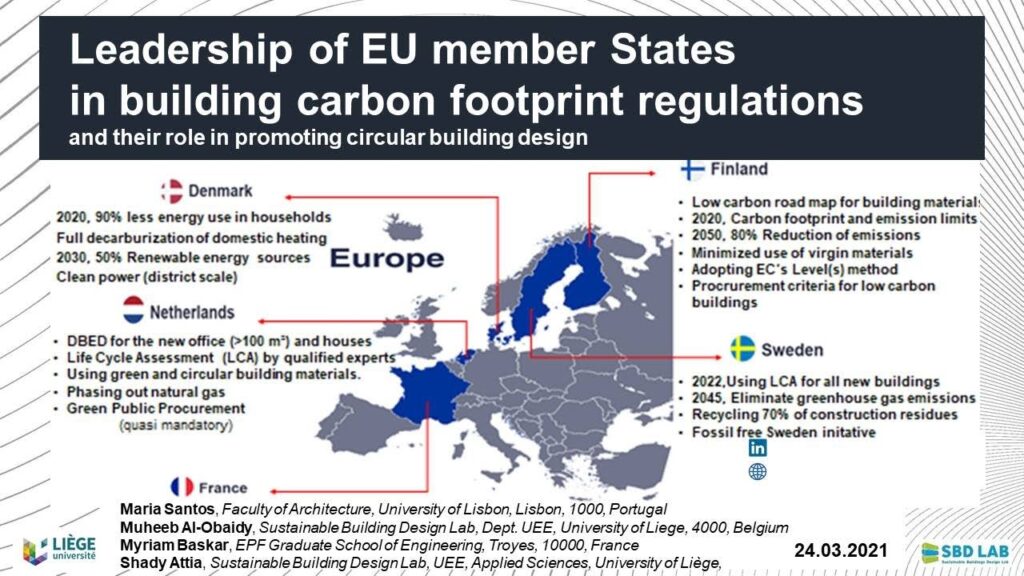
Three interlocking regulatory frameworks have converged to fundamentally rewrite the rules of construction in the European Union. Together, they transform embedded carbon from an unmeasured footnote into a tradable, reportable, and—most critically—avoidable liability. For the concrete industry, this is not a gentle nudge toward gradual improvement. It is a hard reset.
The GWP Mandate: Putting Carbon on the Blueprint
The centerpiece of this regulatory shift is Delegated Regulation (EU) 2026/52, published by the European Commission on May 4, 2026, and entering into force on May 24, 2026 . This framework establishes a standardized methodology for calculating the Global Warming Potential (GWP) of buildings across their entire life cycle—from the extraction of raw materials to the demolition and waste management decades later .
Under the revised Energy Performance of Buildings Directive (EPBD), the timeline is now fixed and aggressive:
- From January 2028: All new buildings larger than 1,000 square metres must calculate and disclose their life-cycle GWP on Energy Performance Certificates (EPCs) .
- From January 2030: This requirement extends to all new buildings, regardless of size .
The regulation covers emissions at every stage: production and transport of construction products, on-site construction activities, operational energy use, material replacements, demolition, waste transport, and end-of-life processing including reuse, recycling, and disposal . Crucially, it allows for the use of default values where specific product data is unavailable, while strongly incentivizing the use of verified manufacturer data through the Construction Products Regulation and Ecodesign frameworks .
For concrete producers, this means their product’s carbon footprint is no longer an internal metric. It will appear on building certificates. Architects and developers will compare GWP numbers the way they currently compare compressive strength. The lowest-carbon concrete will win contracts—not as an aesthetic preference, but as a regulatory necessity.
CPR 2026: The CE Mark Gets a Carbon Line
If the EPBD addresses buildings, the revised Construction Products Regulation (CPR)—which took effect on January 8, 2026—addresses the products that go into them .
The new CPR replaces Regulation (EU) 305/2011 and fundamentally alters what it means to CE-mark a construction product. Where previously the Declaration of Performance and Conformity (DoP) focused exclusively on technical characteristics—strength, fire resistance, thermal conductivity—it must now include the product’s environmental sustainability performance across its life cycle .
For concrete manufacturers, this means one number matters above all others: GWP-total, expressed in kg CO₂ equivalent per declared unit, calculated according to EN 15804+A2 . This single value—drawn from an Environmental Product Declaration (EPD) verified to the European standard—is now a CE-marking gate. Without it, market access is not compromised. It is blocked.
The CPR does not immediately require GWP disclosure for every product family. The European Commission’s first Working Plan for 2026-2029, published in December 2025, prioritizes the development of harmonized technical specifications for product families including concrete and cement . But the direction is unambiguous: the carbon line on the DoP will become mandatory across the spectrum, and the timeline is measured in months, not years.
As one industry analysis notes: “Product managers who can pull the right EN 15804+A2 number, match the declared unit, and clear verification will keep market access smooth while others scramble” . The CPR transforms environmental performance from a marketing differentiator into a regulatory requirement—and the concrete industry is only beginning to grasp the implications.
CBAM: The Carbon Price at the Border
The third pillar of the new regime is the Carbon Border Adjustment Mechanism (CBAM) , which entered its definitive phase on January 1, 2026, after a transitional reporting period that began in October 2023 .

CBAM is, in essence, a carbon tariff. Importers of carbon-intensive goods into the EU—including cement and concrete products—must now purchase CBAM certificates corresponding to the embedded carbon content of their imports . The price of these certificates is linked to the weekly closing price of EU Emissions Trading System (ETS) allowances, effectively imposing the same carbon cost on imports that EU producers face domestically .
For the concrete industry, CBAM creates a level playing field—but only for producers who can measure and verify their emissions. Importers can use default values published by the Commission for embedded emissions calculations, but these default values are deliberately conservative . As one industry expert observed, “we’re seeing large price premiums on imports because most traders are using default values to calculate their CBAM costs rather than actual emissions” . Importers who can demonstrate lower actual emissions through verified data pay less. Those who cannot pay a penalty.
The compliance obligations are substantial. Authorized CBAM declarants must:
- Calculate embedded emissions for all CBAM goods imported (cement, iron, steel, aluminum, fertilizers, electricity, hydrogen)
- Submit an annual CBAM declaration by September 30 of each year (first declaration due September 2027 for 2026 imports)
- Surrender CBAM certificates annually, with purchases beginning February 2027
A de minimis exemption applies where total net mass of CBAM goods imported by a single entity falls below 50 tonnes per calendar year—but this is a narrow exception, not a meaningful shield for commercial importers . For the vast majority of concrete and cement entering the EU market, CBAM applies in full force.
The Interlocking Trap: Why Three Regulations Cut Deeper Than One
Individually, each of these regulations would represent a significant compliance burden for the concrete industry. Together, they create a mutually reinforcing system with no escape.
The CPR demands verified GWP data on every construction product. That data feeds directly into the EPBD’s building-level GWP calculations, which will appear on Energy Performance Certificates from 2028 onward. And CBAM ensures that imported concrete faces the same carbon costs as domestic production—but only if importers can produce equivalent verified data. Those who cannot face default values that overestimate their emissions and inflate their costs.
The common thread across all three regimes is the Environmental Product Declaration (EPD) —specifically, EPDs calculated according to EN 15804+A2 and verified by an accredited third party . The EPD is the currency of the new carbon economy in construction. Without it, a concrete product cannot be CE-marked under CPR. Without it, a building cannot accurately report its GWP under EPBD. Without it, an importer cannot claim lower actual emissions under CBAM.
This creates an urgent, industry-wide demand for verified environmental data at scale. And this is where the concrete industry faces its most immediate practical challenge.
The Bottleneck: EPDs at Scale
The problem is simple: producing a verified EPD for a single concrete product using traditional methods takes up to 12 months and costs approximately €15,000 . For a manufacturer with dozens or hundreds of product variations—different mix designs, different compressive strengths, different supplementary cementitious material (SCM) percentages—this timeline is not merely inefficient. It is impossible.
Yet the new regulations leave no alternative. Without EPDs, market access is at risk. As one industry analysis warns, “for precast concrete manufacturers, this means that without the ability to quickly and scalably generate environmental data such as EPDs, they face significant risks in the worst case, including sales bans, penalties, competitive disadvantages, and barriers to innovation” .
The industry’s response has been the emergence of digital platforms designed to automate EPD generation. Emidat, one such platform, claims to reduce EPD creation time from 12 months to a few days, and cost from €15,000 to a few euros per product, by automating life-cycle analysis, integrating with databases of over 130,000 existing EPDs, and incorporating pre-verification through accreditation bodies including IBU (Germany), INIES (France), and EPD Global .
Over 100 companies, including Railbeton, Graspointner, and Cemex, have already adopted such platforms. But for the broader industry—particularly small and medium-sized manufacturers—the transition to automated, scalable EPD generation remains uneven. And the clock is ticking.
Low-Carbon Concrete: From Niche to Necessity
The regulatory pressure created by these frameworks is not merely punitive. It also creates a powerful incentive structure that favors low-carbon concrete technologies.
Research published in 2024 demonstrates that high-volume replacement of cement with supplementary cementitious materials (SCMs)—up to 55-70% replacement—can reduce concrete’s global warming potential by approximately 50%, from roughly 450 to 240 kg CO₂-equivalent per cubic metre . However, the same research highlights a critical inconsistency: depending on the LCA tool used, GWP calculations for the same mix can vary by as much as 30% (50-80 kg CO₂-eq/m³) . This variation underscores the importance of standardized calculation methodologies—precisely what Delegated Regulation (EU) 2026/52 aims to provide.
Beyond technical solutions, the regulatory framework explicitly encourages the use of “low-carbon construction materials, like clean steel and cement, and to promote carbon storage techniques, such as wood construction, as well as reuse and recycling” . This is not subtle. The Commission is using the GWP mandate as a market-shaping tool, redirecting demand away from high-carbon conventional concrete and toward lower-carbon alternatives.
For concrete producers, the strategic implications are clear: companies that invest in low-carbon mix designs and verified EPDs will gain competitive advantage. Companies that delay will find themselves locked out of the most lucrative markets—particularly public tenders and large commercial developments where GWP disclosure is already becoming a pre-qualification criterion.
What This Means for Architects and Developers
For professionals specifying concrete, the new regulatory landscape demands a fundamental shift in procurement practices.
Where once the decision was driven primarily by compressive strength, price, and local availability, GWP is now a fourth, non-negotiable parameter. Architects must request EPDs for specified concrete products. Developers must aggregate product-level GWP data to calculate building-level life-cycle emissions. And both must understand the nuances of EN 15804+A2—the difference between GWP-fossil, GWP-biogenic, GWP-luluc, and GWP-total—to ensure compliance .
The 2028 deadline for GWP disclosure on EPCs for buildings over 1,000 m² means that projects entering design now will be among the first subject to these requirements. Specification decisions made in 2026 will determine compliance outcomes in 2028. Waiting is not a strategy.
The Global Ripple Effect
While these regulations apply within the EU, their influence will extend far beyond European borders.
CBAM, in particular, has global implications. Importers of cement and concrete products from Turkey, China, Egypt, and other major suppliers now face carbon costs that will reshape trade flows . The de minimis threshold of 50 tonnes per importer per year exempts only the smallest volumes . Commercial-scale imports are fully captured.
Moreover, the EU’s regulatory framework is likely to serve as a model for other jurisdictions. The United Kingdom, Japan, and Canada are all exploring similar mechanisms. California is developing its own low-carbon concrete procurement standards. The EU has effectively set the global benchmark for embodied carbon regulation—and the rest of the world is following.
The Path Forward
The concrete industry faces a decade of transformation compressed into months. By 2028, GWP disclosure will be mandatory for large new buildings. By 2030, for all new buildings. By 2027, CBAM certificates must be surrendered for 2026 imports. The CPR’s environmental performance requirements are already in force.
This is not a gradual phase-in. It is an abrupt shift.
For concrete manufacturers, the immediate priorities are clear:
- Establish scalable EPD generation. Manual, product-by-product EPD creation is no longer viable. Digital platforms that automate LCA and incorporate pre-verification are essential.
- Invest in low-carbon mix designs. High-volume SCM replacement, carbon-cured concrete, and other emerging technologies will become competitive necessities.
- Integrate GWP data into sales and marketing. Architects and developers will choose based on carbon performance. Manufacturers that cannot provide verified data will lose contracts.
For architects and developers, the priorities are equally urgent:
- Request EPDs for all specified concrete products. Make GWP a selection criterion now, before it becomes a regulatory requirement.
- Build capacity for building-level GWP calculation. The 2028 deadline is approaching. Projects in design today will be among the first affected.
- Engage with suppliers on low-carbon alternatives. The concrete industry will respond to demand. Specify low-carbon mixes, and the market will provide them.
The blueprint for European construction is being redrawn—not by architects, but by regulators, responding to the undeniable physics of climate change. Concrete will remain the foundation of the built environment. But its carbon footprint will no longer be invisible.
And for the industry, that changes everything.
Frequently Asked Questions (FAQ)
Q: When do the new GWP disclosure requirements take effect?
A: For new buildings larger than 1,000 m², life-cycle GWP must be disclosed on Energy Performance Certificates from January 2028. For all new buildings, the requirement extends to January 2030 .
Q: What is an EPD, and why does it matter?
A: An Environmental Product Declaration (EPD) is a verified document reporting a product’s environmental impact across its life cycle, calculated according to EN 15804+A2. Under the revised Construction Products Regulation, GWP data from EPDs must be included in the Declaration of Performance for CE-marked construction products .
Q: How does CBAM affect imported concrete and cement?
A: CBAM requires importers to purchase certificates corresponding to the embedded carbon content of imported cement and concrete products. The certificate price is linked to EU ETS allowance prices. Importers can use default values for emissions calculations, but verified actual emissions data yields lower costs .
Q: Can concrete actually be low-carbon?
A: Yes. High-volume replacement of cement with supplementary cementitious materials (SCMs) can reduce GWP by approximately 50%. Emerging technologies including carbon-cured concrete offer further reductions .
Q: How long does it take to produce an EPD for a concrete product?
A: Traditional methods take up to 12 months and cost approximately €15,000. Digital platforms now automate the process, reducing time to a few days and cost to a few euros per product .
Q: Do these regulations apply to renovations of existing buildings?
A: The current requirements focus on new construction. However, the EPBD includes provisions for major renovations, and the regulatory trajectory suggests expanding coverage over time.