The AI Paralegal: How Small Law Firms are Using LLMs for Discovery
The AI Paralegal: Discover how small law firms are using AI paralegals to automate discovery workflows. Learn about document summarization, deposition analysis, and tools that deliver 63% faster document review.
The Discovery Problem No One Talks About
Discovery is the backbone of litigation—and the bane of every small law firm’s existence.
Thousands of pages of documents. Hundreds of emails. Deposition transcripts that run longer than novels. A solo practitioner or small team faces the same document volume as a firm fifty times their size—but with a fraction of the resources to process it.
For decades, the only answer was brutal. Billable hours stacked sky-high. Paralegals worked nights. Associates drowned in paper. And the client paid for every single minute.
That era is ending.
Large language models (LLMs) have quietly become the most powerful paralegal small firms have ever hired. They do not sleep. They do not bill by the hour. And they can read a 300-page deposition transcript in the time it takes a human to refill their coffee.
This guide explores how small law firms are deploying AI paralegals for discovery workflows—document summarization, deposition analysis, privilege review, and more—with real results, real tools, and real ROI.
The Tipping Point: AI Adoption in Small Firms
The numbers tell a clear story. AI is no longer optional for small law firms—but adoption is accelerating fast.
According to the American Bar Association’s 2025 Legal Industry Report, large firms (51+ lawyers) reported a 39% generative AI adoption rate. Firms with 50 or fewer attorneys had an adoption rate of 20% .
However, a separate survey of 2,000+ legal professionals found that 42% of firms are now using AI technologies—nearly double the 26% reported in 2024. And another 42% expect their use of AI to increase in 2026 .
The gap between large and small firms is closing. Why? Because small firms are discovering that AI tools designed specifically for their needs—affordable, scalable, and integrated with existing software—are finally available.
The ROI reality is striking. According to Thomson Reuters data, law firms with visible AI strategies see ROI at 3.9 times more than firms without significant AI adoption plans . For small firms, these time savings create opportunities to accomplish more with limited resources and compete effectively with larger organizations.
The AI Paralegal’s Core Capabilities for Discovery
What exactly can an AI paralegal do? The answer depends on the tool, but core capabilities across the market cluster around several key discovery workflows.
Document Summarization and Analysis
The most common use case is straightforward: feed the AI a document, get back a summary.
At Bochetto & Lentz, P.C. , a 13-lawyer firm handling complex commercial litigation, Partner David Heim used AI to digest a dense 50-page scientific report. He then used the same tool to draft a letter based on the summary. The result? He finished in under an hour what would have taken half a day .
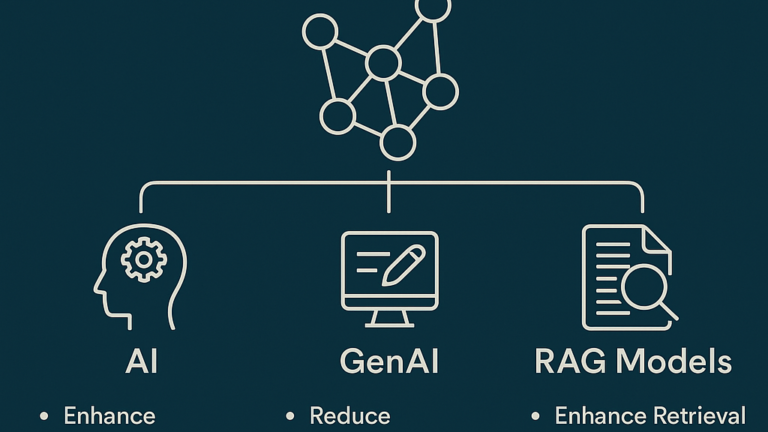
The technology behind this is called Retrieval-Augmented Generation (RAG) —a technique that combines LLMs with a specialized, high-performance context database. When a user inputs a query, the system searches the databases for relevant documents, which are then passed to the LLM in the context window to generate a grounded response. This approach avoids training on sensitive data, ensuring security compliance .
Deposition Summary and Timeline Extraction
Depositions are discovery gold—and the most time-consuming material to process.
Guy D’Andrea, a partner at Laffey Bucci D’Andrea Reich & Ryan, uses AI to support abuse survivors. When facing thousands of pages of documents, he describes the impact:
“I’ll have a summary that’s near perfect and a timeline that outlines every significant event contextually in less than seven minutes. It saves us weeks!”
The timeline feature is particularly valuable for client preparation. D’Andrea notes that clients often worry about getting confused by defense questions or forgetting specific dates. AI produces a complete, dated timeline they can work from—easing client anxiety and improving deposition performance .
Specialized tools like LawLM.ai focus specifically on AI-generated deposition summaries and analysis, offering a chatbot to analyze testimonial evidence across multiple witnesses. Some products even offer no-subscription models for collaboration between lawyers, experts, and clients .
Privilege Review and Document Categorization
One of the most expensive discovery tasks is privilege review—identifying which documents are protected and should not be produced.
AI tools can now categorize documents automatically. Systems like Dynamiq’s AI agent, built on IBM’s watsonx platform, can :
- Perform semantic contract search across thousands of documents
- Conduct document comparison analysis
- Generate clause-level compliance scoring
The AI agent can also automatically execute workflows, delivering files for approval and escalating complex cases for human review. This shifts legal departments from reactive to proactive planning .
Docket Management and Deadline Calculation
Discovery is governed by deadlines. Missing one can be catastrophic.
Mitratech’s ARIES™ Advanced Docket Management uses governed AI to automate the extraction, calculation, and scheduling of court-mandated deadlines. The system can :
- Extract key dates from court-issued PDFs
- Calculate relative dates based on primary court triggers
- Generate reviewable tasks and calendar appointments
- Reconcile amended orders automatically
- Account for jurisdictional time zones
The result: reduced manual docketing effort by up to 66% , saving approximately 30 minutes per scheduling order .
Real Firm Results: What Small Firms Are Achieving
The abstract benefits are compelling. The concrete results are even more so.
63% Faster Document Review
According to Thomson Reuters data, legal professionals using AI-powered tools report 63% faster document review and contract drafting. They also find twice as many relevant cases in the same timeframe. For resource-conscious firms, this translates to 10% additional capacity without overhead—freeing up to 12 hours weekly per attorney for strategic work .
30% More Billable Hours
Smokeball, a legal practice management platform serving over 6,000 law firms with 25,000 daily users, developed Smokeball AI on AWS. Their AutoTime tool, which combines Amazon Bedrock and Amazon SageMaker, automates time tracking and helps lawyers capture up to 30% more billable hours .
The same platform saves lawyers up to 3 hours daily on administrative tasks like form and document creation, using generative AI for swift document processing, analysis, and correspondence drafting .
Expanded Practice Areas
Safa Riadh, an attorney at Valiant Law, describes AI’s impact as “unreal.” The AI-enhanced research capabilities let him handle higher case volumes while maintaining quality standards. More importantly, he can now take cases in new practice areas—previously avoided due to research time requirements—expanding his revenue streams .
“When I can solve somebody’s problem quicker, not only is my client happy with me, but my reputation in the community is strengthened.”
Up to 80% Time Savings on Legal Research
Guy D’Andrea reports that AI-powered legal research has saved him up to 80% of the time he previously spent on that task. The time savings allow him to focus on the sensitive client relationships that define his practice .
The Technology That Makes It Possible
For lawyers who want to understand what is happening under the hood, a brief technical explanation helps demystify the tools.
How LLMs Work for Legal Tasks
Foundation LLMs—such as OpenAI’s GPT-5, Google Gemini, Meta’s LLaMA, and Anthropic’s Claude—are built upon the transformer architecture. They have been trained on essentially all available text on the internet (trillions of words). It would take a human 11 million years to read the same amount of text .
However, foundation models have a critical limitation: they can “hallucinate”—generate text that looks accurate but contains semantic flaws. For legal work, this is unacceptable.
The RAG Solution
The solution is Retrieval-Augmented Generation (RAG) . Instead of relying on the model’s general knowledge, RAG combines the LLM with a specialized database containing your specific case documents. When you ask a question, the system first searches your documents, retrieves relevant passages, and then passes those specific passages to the LLM as context for generating a response .
This means the AI is not guessing. It is answering based on your actual documents.
RAG also enables model plug-and-play. Because the knowledge base is separated from the language model, newer or better LLMs can be swapped into existing pipelines without redesigning the system .
Agentic AI: Beyond Chatbots
The next evolution is agentic AI—autonomous digital agents that can observe case data, make decisions, execute actions across legal systems, verify results, and continuously improve without human prompting .
Unlike chatbots or AI copilots that wait for user prompts, agentic AI continuously monitors legal activity and acts on it autonomously. These agents can :
- Review and summarize contracts
- Flag risks and compliance issues
- Track deadlines and filing obligations
- Route work to the right people
- Update matter records automatically
- Generate drafts and reports
- Learn from outcomes to improve performance
The AI Paralegal Toolkit: What’s Available for Small Firms
The market has matured significantly. Small firms now have options at every price point.
Comprehensive Legal AI Platforms
| Tool | Key Features | Best For |
|---|---|---|
| CoCounsel Legal (Thomson Reuters) | Document analysis, legal research with Westlaw content, drafting, summarization. 63% faster document review | Firms already using Westlaw or Practical Law |
| Smokeball AI | Archie (AI assistant), Intake (automated client intake), AutoTime (time tracking). Up to 30% more billable hours | Practice management integration |
| LAW.co | Agentic AI for contracts, research, compliance, case management. Autonomous operations | High-volume contract and matter management |
Specialized Discovery Tools
| Tool | Specialization |
|---|---|
| LawLM.ai | Deposition summaries and analysis; multi-witness testimonial chatbot |
| Supio.com | Plaintiff’s personal injury document formatting and data |
| Disco’s Celia | Generative AI for discovery workflows |
| Briefpoint.ai | Automated written discovery drafting |
Integrated Solutions
Many small firms prefer AI integrated into tools they already use:
- Lexis+ : LexisNexis proprietary LLM with AI-assisted case law research
- Clio : AI-integrated practice management software
- Filevine : AI-enhanced case management with document extraction and deposition analysis
Implementation: How Small Firms Get Started
The barrier to entry is lower than many lawyers expect.
Start with What You Already Have
Firms using Westlaw or Practical Law may already have access to CoCounsel features. The platform works with existing subscriptions—no complex setup process or months-long training period required .
The “Right-Sized” AI Approach
CoCounsel Essentials was built specifically for small and midsize firms, delivering professional-grade capabilities through manageable interfaces. It integrates seamlessly with existing workflows rather than requiring complete system overhauls. Most important, it offers scalable pricing models that align with firm growth trajectories .
The Human-in-the-Loop Principle
Every successful implementation maintains human oversight. As Kiersty DeGroote of Bochetto & Lentz puts it: “You still have to verify what’s cited—but that doesn’t mean it’s wrong. It’s part of the process” .
Diane Haar of Hawaii Disability Legal Services uses AI-Assisted Research as a starting point but follows proper verification steps: “You always need to double-check the work. You still have to read the cases” .
Security and Ethics
For small firms concerned about data security, the tools have matured. Mitratech’s ARIES, for example, is built on governance-grade security with three core principles :
- Focused Utility: AI used strictly for extraction and calculation, not for generating legal advice
- Data Privacy: No document data retained within the AI model
- Human-in-the-Loop: All automated entries are presented as reviewable tasks
The Road Ahead: What to Expect by 2027
AI adoption in small law firms is still in early innings. The trajectory is clear.
From Pilot to Infrastructure
According to the 2026 Legal Tech & AI Outlook, AI will soon become standard in core litigation workflows. Firms will transition from pilot projects to enterprise-level AI deployments, focusing on accuracy, compliance, and training. By 2026, AI will have transitioned from an emerging innovation to everyday infrastructure .
Predictive Analytics
Predictive litigation tools will allow firms to forecast case outcomes and risks, enabling smarter pricing, case management, and settlement decisions . A survey found that 38% of respondents plan to use AI-powered predictive analytics for trial preparation, and 46% believe AI will impact eDiscovery the most within the next five years .
Agentic Workflows
Agentic AI will handle end-to-end processes automatically—while keeping the human in the loop—managing multi-step tasks from research through drafting. These workflows advance work in the background, freeing lawyers to focus on creative thinking, strategic planning, and relationship building .
Frequently Asked Questions
Q: Is AI affordable for a solo practitioner?
A: Yes. Tools like CoCounsel Essentials offer scalable pricing. Smokeball AI is integrated into existing practice management subscriptions. Many platforms offer free trials.
Q: Do I need to be tech-savvy to use these tools?
A: No. The best tools integrate with software you already use—Microsoft 365, Westlaw, Clio—and require no complex setup. Training is typically minimal.
Q: Can AI replace a human paralegal?
A: No. AI augments rather than replaces. It handles repetitive, time-consuming tasks, freeing paralegals and attorneys to focus on higher-value work that requires judgment, strategy, and client relationships.
Q: How accurate is AI for legal work?
A: Professional-grade legal AI tools are highly accurate for tasks like summarization, extraction, and categorization. However, all outputs require human verification. The consensus across firms is that AI provides an excellent starting point, not a final product.
Q: Is client data secure with AI tools?
A: Professional legal AI platforms are built with security as a priority. Features include end-to-end encryption, role-based access control, no data retention by AI models, and compliance with standards like SOC2 and ISO 27001 .