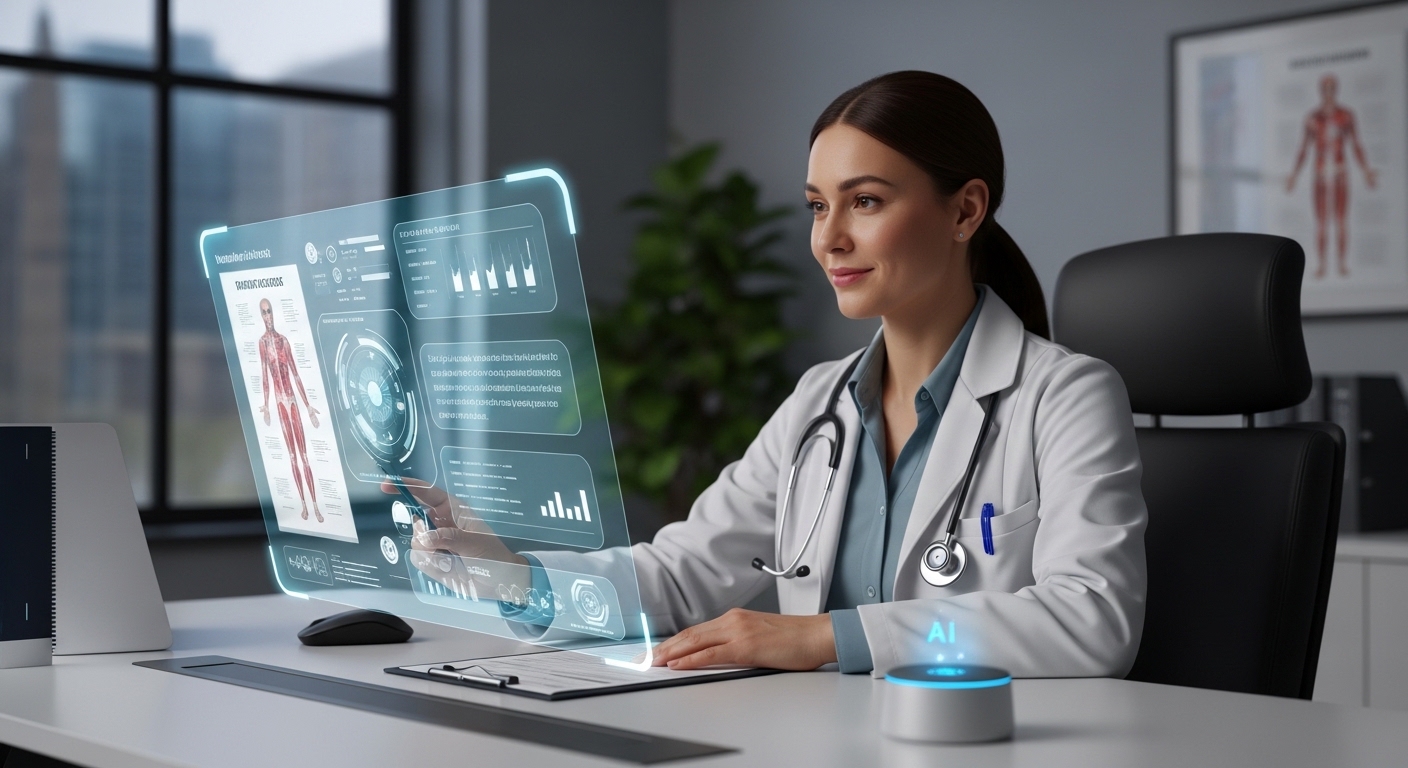
Medical Transcription 2.0: How AI is Reducing Physician Burnout in 2026
Medical Transcription 2.0: Discover how ambient AI scribes are transforming medical documentation and reducing physician burnout. Learn about time savings, ROI, and implementation strategies from leading health systems in 2026.
The Crisis Behind the Clipboard
For every hour a physician spends face-to-face with a patient, they spend nearly two hours on electronic health record (EHR) documentation and desk work . The result is a phenomenon the American Medical Association has dubbed “Pajama Time”—after-hours documentation done at home, on weekends, and during what should be personal time .
The numbers are staggering. A recent survey of over 2,400 physicians found that 62.8% manifest at least one symptom of burnout . The World Medical Association declared a global pandemic of physician burnout in 2018. In 2022, the U.S. Surgeon General issued an advisory pointing to a burnout crisis that “not only harms individual workers but also threatens the nation’s public health infrastructure” .

The financial toll is equally severe. Burnout-driven turnover costs an estimated $4.6 billion annually in the United States from physician turnover and reduced clinical hours . More than 11,000 primary care physicians leave their practices each year, resulting in over $979 million in excess healthcare expenditures .
But 2026 has brought a powerful new weapon in this fight: ambient AI scribes.
What Is Medical Transcription 2.0?
Traditional medical transcription required doctors to dictate notes after patient visits—or worse, type while patients talked. Medical Transcription 2.0 is fundamentally different.
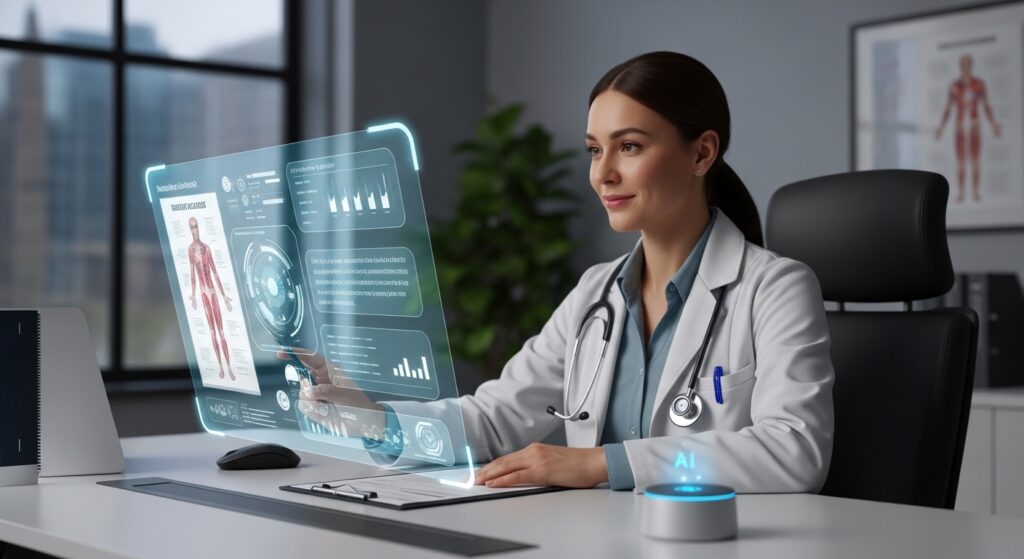
Ambient Clinical Intelligence (ACI) uses generative AI to listen to patient-clinician conversations and automatically generate structured clinical notes in real time . The technology combines:
| Component | Function |
|---|---|
| Speech recognition | Converts spoken words to text |
| Natural language processing | Understands meaning and intent |
| Speaker diarization | Differentiates between physician and patient voices |
| Generative AI | Creates structured notes (HPI, ROS, Physical Exam, A&P) |
| EHR integration | Pushes completed notes directly into medical records |
The workflow is elegantly simple :
- Record — The physician opens a mobile app and starts ambient recording during the encounter
- Listen — The AI captures the multi-party conversation and identifies speakers
- Generate — Within seconds, it produces a specialty-aware structured draft note
- Review — The clinician edits and signs off; the note is pushed to the EHR
The result? Physicians spend less time typing and more time looking patients in the eye.

The Evidence: What Peer-Reviewed Research Shows
The impact of ambient AI scribes is no longer anecdotal. Multiple peer-reviewed studies published in 2025-2026 have quantified the benefits.
The Mass General Brigham Study
A quality improvement initiative at Mass General Brigham (MGB), the largest health system in Massachusetts, explored how generative AI scribes impacted physician well-being . The results, published in the Journal of the American Medical Informatics Association, showed significant reductions in cognitive task load following scribe implementation. Physicians reported reduced burnout and decreased intent to leave their positions .
The MGB case study, now taught at Harvard Business School, describes how the health system piloted ambient documentation tools to address increasing rates of burnout and turnover driven by EHR administrative burden .
The Randomized Controlled Trial
An NIH-published randomized controlled study with a step-wedge design measured the effect of ambient clinical intelligence on documentation burden . The findings were dramatic:
| Metric | Improvement |
|---|---|
| Burnout | 30.3% reduction |
| Frustration with documentation | 49.5% reduction |
| Time spent on documentation | 51.7% reduction |
| Lack of patient connection | 19.6% reduction |
Before implementation, 88.9% of providers reported frustration with the documentation process and 96.8% reported spending too much time documenting patient encounters .
The study also measured objective documentation burden using EHR metadata. Early implementers of AI scribe technology reduced their “Pajama Time” (after-hours documentation) by an average of 26 minutes per day, while late implementers saw an increase of 3.2 minutes per day . The difference-in-differences analysis was statistically significant across all burden indicators.
The Telemedicine Study
A 2026 study published in Telemedicine and e-Health evaluated provider attitudes toward AI scribes in telehealth settings . The results showed that three-fifths of providers experienced decreased burnout attributed to the AI scribe, and two-thirds reported enhanced satisfaction with documentation time and patient engagement .
Real-World Results from Leading Health Systems
Beyond academic studies, major health systems are reporting real-world impact.
Atrium Health: The DAX Copilot Experience
Atrium Health implemented Nuance’s DAX Copilot (now rebranded as Microsoft Dragon Copilot) across their system . The results from 112 clinicians included:
- 40 minutes saved per day on documentation
- 70% reduction in feelings of burnout and fatigue
- 50% less time spent on documentation, cutting after-hours work
- 7 minutes saved per patient visit on note-taking
- 5 additional appointments per day per clinic
Clinician satisfaction was remarkably high: 92% found DAX Copilot easy to use, 85% said they would miss the tool if removed, and 68% felt patient care improved .
Dr. Matt Anderson from Atrium Health reported that physicians spent more quality time with patients and had easier daily schedules .
Mass General Brigham: Pilot Results
MGB’s pilot program showed promising reductions in burnout, intention to leave, and increased physician efficiency . The health system is now contemplating how to scale the technology responsibly across their enterprise.
The Financial Case: ROI of Ambient AI Scribes
For health system administrators, the ROI question is critical. A 2026 analysis in JAMA Network Open provided one of the first quantitative evaluations .
Direct Financial Returns
The study of over 1.2 million ambulatory encounters found that access to an ambient AI scribe was associated with:
- 5.8% increase in weekly relative value units (RVUs)
- 2.8% increase in encounters per week
- No increase in claim denials
The change in RVUs grew over time, suggesting cumulative benefit as physicians became more proficient with the tool . A weekly increase of 1.8 RVUs translates to roughly $3,000 annually per physician based on 2025 Medicare rates.
Cost Structure
Ambient AI scribes typically cost $200 to $600 per clinician per month in subscription fees . For a large health system, these costs can be substantial—but the ROI calculation extends beyond direct RVU gains.
Indirect Financial Returns: Retention
Burnout doubles or triples the likelihood of physician turnover. Each departing physician costs an estimated $500,000 to $1 million in recruitment, onboarding, and lost productivity . Organizations that reduce burnout through AI scribes can realize enormous savings through improved retention.
Pricing in Practice
Pricing varies significantly by vendor and volume. Microsoft Dragon Copilot (formerly Nuance DAX) ranges from $369 to $830+ per provider per month depending on volume contracts . For comparison, smaller vendors like Vero offer plans at $69 per provider per month on annual billing .
| Vendor | Monthly Price (per provider) | Annual Cost | Best For |
|---|---|---|---|
| Microsoft Dragon Copilot | $369–$830+ | $4,428–$9,960+ | Large health systems |
| Vero | $69–$89 | $828–$1,068 | Solo practitioners, small groups |
Implementation Challenges: What Physicians Don’t Like
The technology is promising, but not without friction. Real physician feedback reveals several challenges :
Still requires editing. While AI generates draft notes, physicians report doing “a fair amount of editing.” The Assessment & Plan section is frequently described as “verbose” and full of “fluff.”
Hallucination risk. AI can generate inaccurate notes with errors or hallucinations, which makes physicians resistant to adoption . One physician reported “variable success” across different clinical scenarios.
Deployment complexity. Enterprise deployments can take 6 months and require IT sign-off, making quick adoption impossible for smaller practices .
Platform limitations. Some solutions are iPhone-only, locking out Android users completely.
Specialty variability. Performance varies significantly by medical specialty. What works well for primary care may struggle with psychiatry or surgery.
Beyond Scribes: The AI Copilot Vision
The most sophisticated implementations go beyond simple transcription to serve as true AI copilots .
OneLine Health, founded by medical student and CEO Karan Gill, describes its platform as an “AI clinical reasoning agent” that aggregates fragmented patient data—subjective history, labs, imaging, prior notes—before the physician ever enters the exam room . The AI extracts only the data relevant to that specific provider and that specific visit, transforming pre-visit time from an underutilized void into deep clinical preparation.
The result, as Gill explains: “The physician enters the room armed with a 360-degree understanding of the patient, allowing the actual visit to focus on management, empathy, and actionable next steps” .
This shift addresses the five core components of a patient visit :
- Taking the subjective history
- Reviewing pertinent labs and imaging
- Synthesizing analytics to orient the physician
- Performing the physical exam
- Managing post-visit documentation
The glaring issue in healthcare today is that steps 1, 2, 3, and 5 have consumed the time meant for step 4—the actual face-to-face connection. AI copilots reclaim that lost time.
The Human Element: What AI Cannot Replace
For all the promise of AI, there is widespread agreement on what it cannot do. As Gill put it: “There’s no AI that’s gonna be able to replace the compassion that providers are able to deliver to patients” .
The goal is not to replace physicians with machines. The goal is to eliminate administrative burdens so physicians can focus on interpersonal connection. When a doctor is not stressed about reviewing 100 pages of medical records manually, they can look their patient in the eye, hold their hand, and confidently reassure them .
This creates a positive feedback loop: healthier, happier physicians lead to better-cared-for, more trusting patients.
Implementation Guide for Healthcare Leaders
For organizations considering ambient AI scribes, several best practices have emerged:
Start with Phased Deployment
Rather than enterprise-wide overhauls, successful integration requires piloting solutions in single departments. This allows frontline staff to test the guardrails, provide feedback, and ensure the technology aligns with patient care .
Choose Copilot Over Autopilot
AI should not be viewed as a replacement for clinical judgment. Position AI as a “copilot” that handles data aggregation and administrative tasks, empowering the physician to operate at the top of their license .
Involve Clinicians in Selection
Integrating dozens of distinct point solutions can increase digital fatigue. By involving both administrators (who focus on cost and efficiency) and frontline clinicians (who champion patient-centric care) in the purchasing process, health systems can achieve unified buy-in .
Address the “Hallucination” Concern
Clinicians are inherently data-driven. Build trust by relying on evidence from peer-reviewed studies. Use phased rollouts to prove efficacy on a small scale before demanding enterprise-wide adoption .
Measure What Matters
Track not just adoption rates but actual outcomes: documentation time, after-hours work, burnout scores, and patient satisfaction.
The Market Outlook
The adoption of voice AI in healthcare is accelerating rapidly. The global voice technology in healthcare market was valued at over $4 billion in 2023 and is projected to exceed $21 billion by 2032, a compound annual growth rate of nearly 20% .
More than 100,000 clinicians now use Dragon Copilot daily across over 600 organizations, including Northwestern Medicine, Stanford Health Care, and Duke Health . The technology has moved from early adopter to mainstream.
Frequently Asked Questions
Q: How much time does an AI scribe actually save?
A: Studies show 26-40 minutes saved per day on documentation, plus a 30-50% reduction in overall documentation time .
Q: Is the technology accurate enough for clinical use?
A: Peer-reviewed studies have scored AI-generated notes 46.91 out of 50 on accuracy and completeness. However, physicians still need to review and edit every note .
Q: Can AI scribes handle multiple specialties?
A: Performance varies. Some solutions offer specialty-specific templates, but physicians report variable success across different clinical contexts .
Q: What about patient privacy?
A: Enterprise solutions comply with HIPAA and offer end-to-end encryption. However, physicians should verify their vendor’s security certifications .
Q: Is this only for large health systems?
A: No. While enterprise solutions target large systems, smaller vendors offer affordable options for solo practitioners and small groups starting at $69/month .
Target Keywords (for SEO):
- AI medical scribe
- Ambient clinical intelligence
- Physician burnout solution
- AI documentation assistant
- Medical transcription AI
- Dragon Copilot review
- Healthcare AI ROI
- Pajama Time reduction
Internal Linking Suggestions:
- Link to a post on “AI in Healthcare Administration”
- Link to a post on “Voice AI Applications in Medicine”
- Link to a post on “The Human-in-the-Loop Model in Healthcare”
Conclusion: Restoring the Human Touch
The physician burnout crisis is not abstract. It is measured in exhausted clinicians, turnover costs, and patients who feel unheard. Ambient AI scribes and copilots are not a complete solution—but they address a primary driver of burnout: the crushing administrative burden that steals time from patient care.
The evidence is clear. Peer-reviewed studies show 30% reductions in burnout, 50% reductions in documentation time, and meaningful improvements in patient connection. Major health systems are scaling the technology. The market is growing at nearly 20% annually.
But the most important outcome is not measured in RVUs or cost savings. It is measured in moments: a physician looking a patient in the eye instead of a screen. A hand held during difficult news. The restoration of the human touch in medicine.
As Karan Gill concluded: “By eliminating all of the administrative or peripheral things on a physician’s plate, they can focus solely on delivering that interpersonal interaction” . That is the promise of Medical Transcription 2.0—and it is arriving now.