How “Agentic AI” Is Taking Over Jobs Workflows in 2026
Discover how agentic AI is transforming construction jobsites in 2026—from RFI summaries and material tracking to daily progress reports. Learn why AI agents are replacing chatbots as digital crew members.
Introduction: The Next Frontier of Construction Tech
For the past two years, the construction industry has been captivated by generative AI—chatbots that can summarize documents, draft emails, and answer questions about project data. These “copilots” have proven useful, but they remain passive tools that wait for human prompts and rely on people to act on their outputs .
In 2026, that paradigm is shifting.
A new class of artificial intelligence is moving onto jobsites—not as chatbots, but as autonomous agents that actively execute work inside real construction workflows. These AI agents handle RFI summaries, track materials, generate daily progress reports, monitor safety compliance, and escalate issues—all without constant human direction .
This article explores the industry pivot from simple text chatbots to agentic AI: what it is, how it differs from copilots, which solutions are already on the market, and why leading contractors like EllisDon are betting their margins on this technology .
Part 1: Copilots vs. Agents – The Fundamental Difference
1.1 What Copilots Do (And Where They Fall Short)
Generative AI copilots have become ubiquitous in construction software. These tools—often embedded in project management platforms—can:
- Summarize lengthy RFI documents
- Draft email responses to subcontractors
- Answer natural-language questions about project data
- Generate basic reports from structured information
But as Nolan Frazier, Head of Sales for Procore Canada, explained in a recent industry webinar, copilots have a fundamental limitation: “Generative AI helps people think. Agentic AI helps people work” .
Copilots are passive. They wait for a prompt, generate a response, and stop. They cannot monitor workflows, enforce follow-through, or take autonomous action. They certainly cannot distinguish between a preliminary concept and a validated requirement—yet traceability is critical in construction .
1.2 What Agentic AI Does
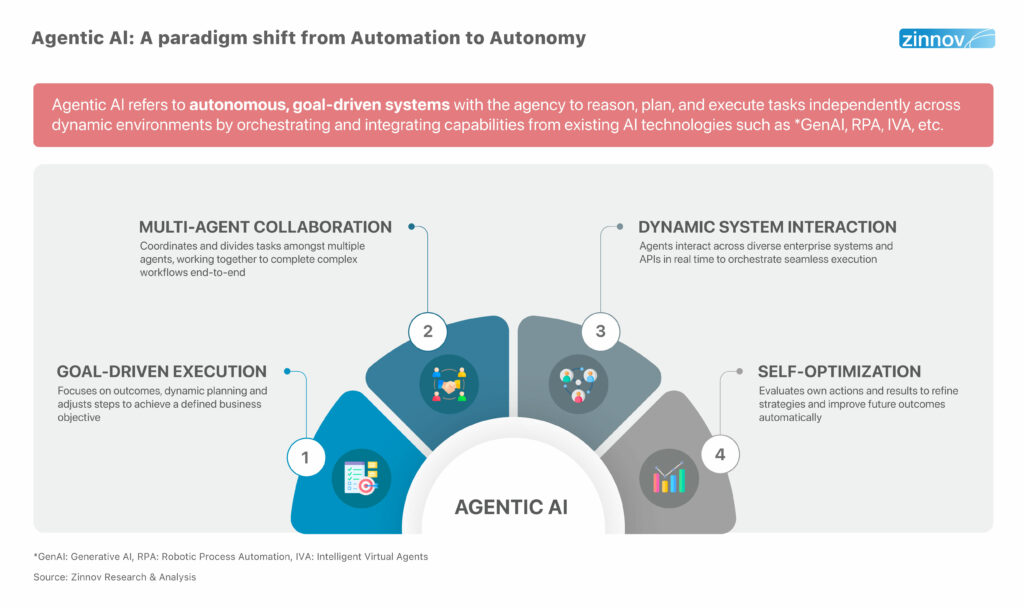
Agentic AI represents a fundamentally different capability. According to a manufacturing-focused analysis from CIO magazine, “While Copilot focuses on supporting specific personas, agentic AI builds autonomous systems designed to achieve specific goals within larger, complex problems” .
In construction terms, this means:
| Capability | Copilot | Agentic AI |
|---|---|---|
| Responds to questions | ✅ Yes | ✅ Yes |
| Proactively monitors workflows | ❌ No | ✅ Yes |
| Takes autonomous action | ❌ No | ✅ Yes |
| Escalates issues automatically | ❌ No | ✅ Yes |
| Learns from past outcomes | ❌ Limited | ✅ Continuous |
| Executes multi-step tasks | ❌ No | ✅ Yes |
Jeff Weiss, Chief Revenue Officer at CMiC, framed it this way: “The opportunity isn’t AI as a chatbot. It’s AI as a role-based digital staff member—project controls assistants, cost analysts, safety monitors—working alongside people” .
1.3 The “Digital Crew Member” Model
Perhaps the most powerful framing comes from a recent On-Site Magazine feature, which describes AI agents as “digital crew members” that protect schedules, margins, and safety . Unlike traditional software that requires humans to pull insights from dashboards, AI agents push actionable intelligence directly to the field—via text message, email, or chat .
As one industry observer noted: “People don’t resist technology. They resist friction” . AI agents succeed because they reduce friction, not add it.
Part 2: Agentic AI Solutions Already on the Market
2.1 Eyrus Lens: Agentic AI by Text Message
In March 2026, Eyrus announced Eyrus Lens, an agentic AI platform that lives within worksite workforce management data and delivers insights via text, email, and in-app chat .
What makes Lens remarkable is its accessibility. A superintendent in the field can simply text a question like “How many electricians are here today?” or “What are trade counts and hours for today?” and receive an instant answer, with a detailed report waiting in their inbox .
Lens doesn’t just answer one-off questions. It can be configured to send automatic updates on a schedule:
- “Send me a safety scorecard every morning”
- “Send me planned vs. actual trade counts daily”
- “Let me know when any workers have worked more than 10 hours in a day”
Perhaps most impressively, Lens can answer open-ended questions that surface insights users didn’t know to look for: “What are some trends I should be aware of?” or “What can we do to make the site safer?”
Built on Anthropic’s Claude model, Lens isn’t a single AI—it’s a team of specialized AI agents working together .
2.2 Trunk Tools: Agents Inside Autodesk Construction Cloud
Trunk Tools has integrated directly with Autodesk Build and BIM 360, deploying “purpose-built agents” that handle day-to-day tasks across RFIs, specifications, submittals, and drawings .
Three agents are currently available:
TrunkText empowers field teams to ask natural-language questions and receive instant, accurate answers sourced directly from project documents—with citations highlighted .
TrunkSubmittal automatically analyzes submittals against corresponding specification requirements and relevant RFIs. The agent identifies discrepancies, recommends action, and drafts communications to subcontractors and architects—all without manual review .
TrunkReview compares a newly uploaded drawing revision to the previous version and produces a visual overlay and written narrative of all changes, even those not marked in clouds. Both outputs are downloadable, accelerating the change order process .
The platform also supports custom agents for specific workflows: automated meeting agendas, daily logs, contract reviews, delay notices, RFI frameworks, and weekly project summaries .
2.3 InQI’s IQ Apps: Domain-Expert Agents
In May 2026, InQI launched its IQ Apps ecosystem—a suite of domain-expert AI agents for architects, builders, and designers .
Codes.IQ acts as a plan-checker, aware of jurisdiction-specific building codes and project zoning requirements .
Estimate.IQ performs construction estimating with quantity takeoffs and regional cost intelligence, pulling from persistent project context rather than starting from scratch each time .
InQuest serves as a conversational assistant with full project context awareness, understanding everything tied to a property address: site plans, previous designs, permit history, and more .
The platform’s “multi-LLM consensus architecture” cross-references outputs from multiple AI providers, surfacing discrepancies as trust signals that no single-model platform can match .
2.4 Zen Intelligence: Physical AI Agents from Japan
In a sign that this trend is global, Japanese startup Zen Intelligence completed a ¥2.5 billion Series A funding round in May 2026 to advance its “Physical AI Agent” technology .
The company’s service, zenshot, uses AI to automatically structure site conditions from 360-degree videos, capturing time changes in processes, safety, and quality. In a case study with Living D, the system reduced site supervisors’ travel time by up to 60% by enabling remote verification .
Zen Intelligence is working toward “unmanned construction sites”—a vision where AI agents, robotics, and vision-language models work together to automate construction management .
Part 3: Real-World Implementation – EllisDon’s Agentic AI Strategy
The most detailed picture of agentic AI in practice comes from EllisDon, one of Canada’s largest construction firms. Nick Thompson, Chief Estimator (Calgary Area), recently shared how the company is deploying AI agents across its operations .
3.1 The Data Foundation
EllisDon invested years in building what Thompson describes as a unified ontology—a structured way of connecting safety, schedule, estimating, cost, logistics, and field data into a single operational view. This foundation, built using Palantir Foundry, enables AI agents to operate across traditionally siloed systems .
The lesson is critical: AI agents are only as powerful as the data foundation beneath them .
3.2 Current Deployments
EllisDon has already deployed automated HSE trend analysis, carbon reporting tools, emissions classification engines, and is working on predictive cost forecasting .
In estimating, Thompson outlined a powerful use case: AI agents trained to analyze historical project benchmarks can generate conceptual estimates and preliminary schedules using high-level project parameters. “The agent can find the most comparable projects, apply real ratios and statistics, and produce an early-stage estimate. From there, it can generate scopes of work and risk registers” .
Thompson emphasized that these are not pilots: “AI in construction is finally operational rather than experimental. These aren’t pilots. These are functioning agentic tools we’re using across the business” .
Part 4: Where Agents Deliver the Fastest ROI
According to the Procore/CMiC/EllisDon panel, contractors see the fastest, most tangible returns from AI agents in repetitive, time-sensitive, and high-risk processes .
4.1 RFIs and Submittals
Projects rarely fail because of one major unresolved RFI. They suffer through dozens of late or forgotten ones. AI agents can monitor aging RFIs, identify critical-path impacts, and escalate issues automatically—long before they become problems .
4.2 Daily Field Logs and Reporting
Instead of supervisors spending an hour each day compiling reports, agents can aggregate data from multiple sources and generate formatted daily logs automatically.
4.3 Materials and Logistics Coordination
Agents can track material deliveries against schedules, flag delays, and coordinate with subcontractors—activities that currently consume significant coordinator time.
4.4 Schedule and Cost Reconciliation
Perhaps the most valuable application: agents that continuously reconcile actual progress against baseline schedules and budgets, flagging deviations in real time rather than waiting for monthly reports.
4.5 Safety Monitoring (Advisory Only)
The panel was unanimous that AI should never replace human accountability for safety. However, AI agents excel at monitoring adherence to safety processes, detecting early warning signals, and escalating concerns. As Frazier noted: “Most incidents aren’t sudden. They’re the result of pressure and inconsistency over time” .
Part 5: The ROI Question – Why This Matters Now
5.1 The Capacity Problem
As David Bowcott, Executive Vice President at PLATFORM Insurance, framed it: “We don’t have a knowledge problem. We have a capacity and consistency problem” .
Construction projects generate enormous volumes of data—from BIM models and schedules to IoT sensors and safety reports. But project teams remain overwhelmed by administrative work. AI agents address this by absorbing coordination tasks that currently consume experienced supervisors’ time .
5.2 The Margin Imperative
Weiss was blunt about expectations: “If AI doesn’t show up in margin fast, it won’t survive” . Contractors are watching labor hours saved, reduced rework, improved forecast accuracy, and fewer late-stage surprises.
Unlike large ERP implementations that take years to show ROI, AI agents can demonstrate value in weeks or months. They can be tested, refined, or abandoned with relatively low cost—supporting a “fail fast” approach .
5.3 The Data Reality Check
The panel pushed back on the idea that data must be perfect before deploying AI. Summary-level data—work hours per million dollars, general conditions percentages, or productivity ratios—can deliver significant value even when granular data remains messy .
Standing still is the bigger risk .
Part 6: Where Agentic AI Is Headed
6.1 From Supporting to Executing
The fundamental distinction between copilots and agents is this: copilots generate text; agents generate outcomes .
In 2026 and beyond, expect AI agents to take on increasingly complex, multi-step tasks: preparing design review packages, updating risk matrices, generating documentation for regulatory submission, and coordinating across subcontractors .
6.2 Physical AI Agents
Zen Intelligence’s “Physical AI Agent” points toward a future where AI doesn’t just process data—it understands spatial relationships, correspondence with drawings, and continuity with past site conditions from time-series 360-degree video .
6.3 Job Sites as Industrial Processes
Joachim Strobel of Liebherr envisions a fundamental shift: “A job site will be organized more like an industrial process. With AI and autonomous systems, it will be possible to plan a job site much more precisely in future—where all processes are mapped in advance, like in industrial production” .
Conclusion: The Digital Crew Member Has Arrived
The transition from copilots to AI agents is not incremental—it is foundational. Copilots help people think. Agents help people work .
For Canada’s construction industry—facing labour shortages, increasing project complexity, and relentless margin pressure—the opportunity is clear: AI agents are emerging as a new kind of crew member. Digital. Tireless. Increasingly indispensable .
As Bowcott summarized, productivity is no longer optional. It is the only lever left. And AI agents may be the strongest hand the industry has yet been dealt .
Frequently Asked Questions (FAQ)
What is the difference between a copilot and an agentic AI?
A copilot is a passive assistant that responds to prompts. An agentic AI is an autonomous system that monitors workflows, takes action, and escalates issues without constant human direction .
What can AI agents do on a construction jobsite?
They can monitor aging RFIs, automatically analyze submittals against specifications, compare drawing revisions, generate daily progress reports, track material deliveries, escalate safety concerns, and provide real-time workforce data via text message .
Is EllisDon using AI agents?
Yes. Nick Thompson, Chief Estimator at EllisDon, confirmed the company is using functioning agentic tools across HSE trend analysis, carbon reporting, emissions classification, and predictive cost forecasting .
How do I get Eyrus Lens?
Eyrus Lens is available now in private beta. It can be accessed through Eyrus’s workforce management platform .
Does the data need to be perfect before using AI agents?
No. Summary-level data can deliver significant value. Standing still is the bigger risk .
Who is responsible when an AI agent makes a mistake?
Humans remain accountable. AI agents support decisions; they do not make them. Contractors must audit outputs and maintain human oversight .
Call to Action (CTA)
Are you using AI agents on your jobsites? Share your experiences in the comments below. And if you found this article valuable, share it with a colleague who needs to know that the digital crew member has arrived.