How AI Foundation Models Are Cracking the Human Brain’s Response Code
AI Foundation Models: Discover how TRIBE v2, FINGERS-7B, and ZUNA are decoding human brain activity, predicting neural responses, and treating neurological conditions like Alzheimer’s and multiple sclerosis.
Introduction: The Digital Mirror of the Mind
For centuries, understanding the human brain has been neuroscience’s greatest challenge. Fragmented experiments, small sample sizes, and the sheer complexity of neural activity have kept the mind’s inner workings largely opaque.
That barrier is collapsing.
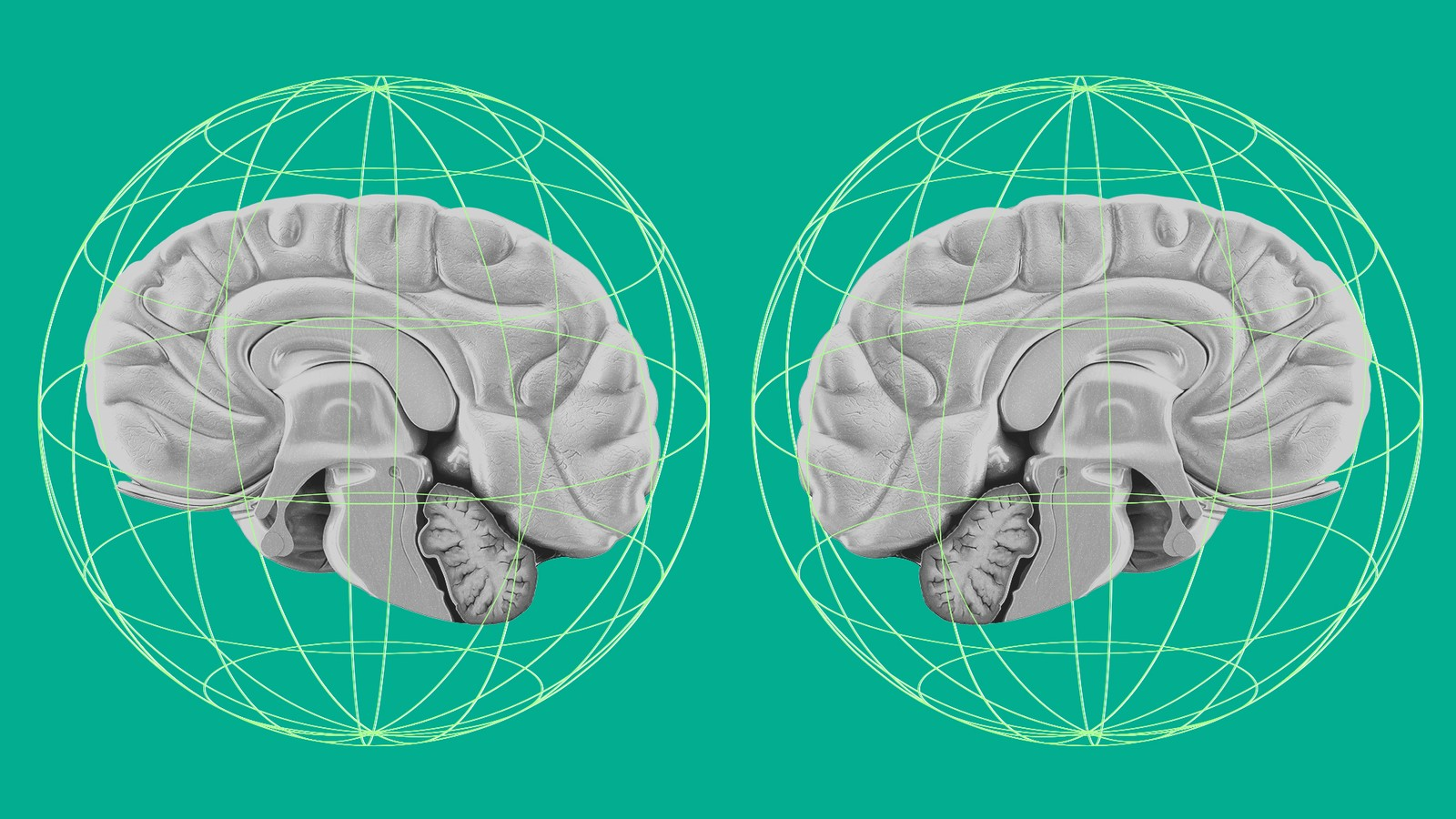
AI foundation models—trained on massive datasets of brain recordings, genomic profiles, and clinical outcomes—are now predicting human neural responses with unprecedented accuracy. These models act as digital mirrors of the mind, allowing researchers to test hypotheses about brain function in silico rather than requiring human subjects for every experiment .
In this article, we explore the breakthroughs that are reshaping neuroscience: Meta’s TRIBE v2, a tri-modal brain foundation model offering 70× higher resolution than previous systems ; MIT’s FINGERS-7B, which delivers 4× more accurate preclinical Alzheimer’s diagnosis ; and open-source initiatives like Zyphra’s ZUNA, which is advancing thought-to-text via noninvasive brain-computer interfaces .
Part 1: TRIBE v2 – The Foundation Model of Vision, Audition, and Language
1.1 What Is TRIBE v2?
On May 5, 2026, a team of researchers led by Stéphane d’Ascoli released TRIBE v2, a tri-modal foundation model capable of predicting human brain activity across visual, auditory, and linguistic stimuli . The model is built on a unified dataset of over 1,000 hours of fMRI recordings from 720 healthy volunteers who watched videos, listened to podcasts, and processed text .
| Feature | TRIBE v2 Specification |
|---|---|
| Training data | 1,000+ hours of fMRI, 720 subjects |
| Modalities | Video, audio, language |
| Resolution | 70× higher than previous models |
| Accuracy vs. linear models | Several-fold improvement |
| Availability | Open-source (CC BY-NC license) |
1.2 How It Works: From Stimuli to Neural Activity
TRIBE v2 learns the mapping between stimulus features (video pixels, audio spectrograms, text tokens) and neural responses (fMRI activity across brain regions). Unlike traditional encoding models trained on single experiments, TRIBE v2 generalizes across tasks, subjects, and languages—enabling zero-shot predictions for novel stimuli .
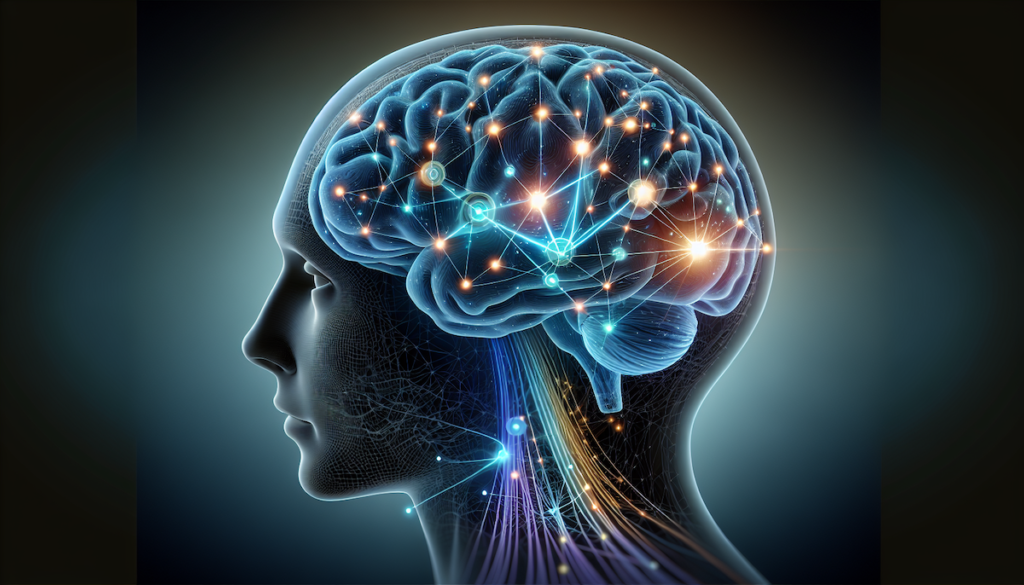
The model’s architecture leverages advances in AI representation learning. Researchers have observed that the internal patterns of large AI models often correspond to measurements taken from living brains . TRIBE v2 exploits this correspondence to predict high-resolution brain responses with accuracy that supersedes traditional linear encoding models .
1.3 In Silico Neuroscience: Testing Theories Without Human Subjects
The most transformative capability of TRIBE v2 is in silico experimentation—testing neuroscience hypotheses in a simulated “digital twin” of the brain before conducting costly human trials .
When tested on seminal visual and neurolinguistic paradigms, TRIBE v2 recovered a variety of results established by decades of empirical research . It can also extract interpretable latent features, revealing the fine-grained topography of multisensory integration—how different senses combine to shape perception .
As Jean-Rémi King, a Meta AI researcher, told IBM: “How brain disorders are being diagnosed and taken care of today is fairly coarse. AI is a paradigm shift in science in general, but in neuroscience in particular” .
Part 2: FINGERS-7B – Eradicating Alzheimer’s with Multi-Omic AI
2.1 The Alzheimer’s Prevention Breakthrough
On April 27, 2026, a team of AI researchers, physicians, and scientists centered at MIT released FINGERS-7B, the first AI foundation model built specifically to make Alzheimer’s disease preventable .
Unlike prior models that analyze only one type of data, FINGERS-7B integrates lifestyle, clinical, genomic, and proteomic data from tens of thousands of at-risk individuals to discover multi-omic biomarkers for preclinical Alzheimer’s .
| Metric | FINGERS-7B Performance |
|---|---|
| Preclinical diagnosis accuracy | 4× better than prior art |
| Responder stratification | 130% improvement |
| Training data | 30,000+ participants (WW-FINGERS network) |
| Availability | Open source (AD Workbench) |
2.2 How FINGERS-7B Works
The model’s innovation is reading multiple “omics” domains together—genomics, proteomics, and clinical biomarkers—rather than one at a time. Each person carries a unique biological fingerprint that reveals disease risk years before symptoms appear .
FINGERPRINT, the companion AI agent system, pairs with FINGERS-7B to run automated multi-omic analyses. Given an individual’s data, the system predicts:
- Risk of developing Alzheimer’s
- The likely time course of cognitive decline
- The effect of candidate interventions—from dietary changes to therapeutics
The model has already identified novel diagnostic biomarkers for preclinical Alzheimer’s, the stage that can precede memory symptoms by a decade or more .
2.3 Open Science and Global Collaboration
FINGERS-7B is deployed in the AD Workbench, the secure cloud environment operated by the Alzheimer’s Disease Data Initiative. Model weights, training code, and evaluation pipelines are all public .
The project builds on Professor Miia Kivipelto’s landmark FINGER study, which now spans 40 countries and 30,000 participants. In February 2026, the Davos Alzheimer’s Collaborative announced a partnership to employ FINGERPRINT for global Alzheimer’s prevention research, ensuring diverse population representation .
As Arvid Gollwitzer, the model’s lead designer, stated: “Someone was going to build the foundation model stack for Alzheimer’s prevention. It should be open, and it should be now” .
Part 3: ZUNA – From EEG to Thought-to-Text
3.1 The Brain-Computer Interface Foundation Model
On February 18, 2026, Zyphra released ZUNA, a 380-million-parameter foundation model trained on electroencephalography (EEG) brain data . ZUNA advances toward thought-to-text—direct communication between human thought and AI systems enabled by noninvasive brain-computer interfaces (BCIs).
But ZUNA is not a distant research prototype. It delivers immediate value for EEG practitioners today:
- Reconstructs high-fidelity brain signals from imperfect, real-world EEG data
- Predicts missing channels from sparse inputs (e.g., consumer headsets with only a few electrodes)
- Scales seamlessly from 16-channel headsets to 256-electrode research systems
3.2 Open Source and Permissive Licensing
ZUNA is released under an Apache 2.0 license, with model weights on Hugging Face, inference code on GitHub, and a simple pip install zuna Python package . This accessibility is critical for accelerating BCI research.
As Paul White, Zyphra’s Chief Business Officer, explained: “We believe the next major modality in AI beyond language, audio, and vision will be thought-to-text enabled by noninvasive BCIs. ZUNA is a step toward that vision, and it solves everyday problems EEG practitioners face today” .
Part 4: The Brain Harmonix Breakthrough – Structure Meets Function
4.1 A Truly Multimodal Foundation Model
In December 2025, researchers presented Brain Harmony (BrainHarmonix) at NeurIPS—the first multimodal brain foundation model that unifies structural morphology and functional dynamics into compact 1D tokens .
Previous models focused on either brain structure (e.g., T1-weighted MRI) or brain function (e.g., fMRI), but never both simultaneously. BrainHarmonix overcomes this by grounding its architecture in two foundational neuroscience principles:
- Structure complements function – different modalities offer synergistic insights
- Function follows structure – brain activity is shaped by cortical geometry
4.2 Massive-Scale Pretraining
BrainHarmonix was pretrained on two of the largest neuroimaging datasets to date:
| Dataset | Subjects | T1-weighted MRI | fMRI Time Series |
|---|---|---|---|
| UK Biobank | 43,112 | 46,455 | 40,162 |
| ABCD | 11,221 | 18,139 | 30,771 |
| Total | 54,333 | 64,594 | 70,933 |
4.3 Key Innovations
The model introduces several technical breakthroughs:
- Geometric pre-alignment – functional activity is aligned with structural geometry using group-level harmonics, imposing physics-informed inductive bias
- Temporal Adaptive Patch Embedding (TAPE) – handles fMRI data with heterogeneous repetition times (TRs) , a major limitation of existing models
- 1D brain hub tokens – compress high-dimensional neuroimaging signals into a compact latent space representing the holistic human brain
BrainHarmonix achieves strong generalization across diverse downstream tasks, including neurodevelopmental and neurodegenerative disorder classification and cognition prediction, consistently outperforming previous approaches .
Part 5: Explainable AI for Neurocognitive Disorders
5.1 Predicting Cognitive Decline in Multiple Sclerosis
Beyond foundation models, researchers are applying explainable AI (XAI) to predict progression of neurocognitive disorders. A 2026 study published in the European Journal of Neurology developed a deep learning model to predict cognitive worsening in multiple sclerosis (MS) patients .
| Metric | Result |
|---|---|
| Sample size | 224 MS patients |
| Follow-up period | 3.4 years (median) |
| Prediction accuracy | 90% |
| Most important predictors | Cortical gray matter volume, age, thalamic volume |
The model’s explainability features identified the most relevant predictors in order of importance: cortical gray matter volume, age, thalamic and hippocampal volumes, T2 lesion volume, and z-cognitive reserve .
5.2 OPTIMUS: Predicting Alzheimer’s Outcomes from Missing Data
The OPTIMUS framework, published in IEEE Transactions on Biomedical Engineering, addresses the “many-to-many” challenge of predicting multiple cognitive outcomes from multimodal biomarkers with missing values .
Using data from 1,205 Alzheimer’s Disease Neuroimaging Initiative (ADNI) participants, OPTIMUS predicts scores across four cognitive domains—memory, executive function, visuospatial ability, and language—from structural MRI, cerebrospinal fluid biomarkers, blood RNA sequencing, and APOE genotype .
Shapley-based attributions reveal domain-specific patterns consistent with established Alzheimer’s pathology:
- Memory → prefrontal cortex features and APOE ε4
- Executive function → dorsolateral prefrontal regions
- Visuospatial performance → parietal and occipital cortices
- Language → temporal regions, including Wernicke’s area
Part 6: The Future – What These Models Enable
6.1 Clinical Applications
Jean-Rémi King sees a near future where neurological disorders are caught earlier, treatments are better matched to patients, and doctors rely less on expensive imaging machines. “Like a new imaging technology or an invasive recording technique, I see large AI models as a tool for understanding how the brain works,” said Takuya Ito, Research Scientist at IBM Research .
6.2 Limitations and Caveats
Researchers consistently warn that strong predictive performance should not be mistaken for deeper understanding. Karl Friston, a neuroscientist at University College London, cautioned: “By construction, they cannot advance our understanding of the brain. To understand is to explain” .
Key limitations include:
- Predictions are not explanations – a model can reproduce brain activity without revealing why the brain produces it
- Data scarcity – brain measurements are expensive and difficult to collect at scale
- Fragility – AI models are “typically much less robust to unforeseen circumstances” than biological systems
Conclusion: The Mind, Decoded
The release of TRIBE v2, FINGERS-7B, ZUNA, and BrainHarmonix marks a turning point in neuroscience. These foundation models are not merely analyzing data—they are predicting, simulating, and illuminating the human brain’s response code.
From Alzheimer’s prevention to thought-to-text BCIs, from multiple sclerosis prognosis to in silico brain experiments, the convergence of AI and neuroscience is accelerating discovery at an unprecedented pace.
The models are open. The datasets are growing. The questions are urgent. And for the first time, we have tools that can begin to answer them.
Frequently Asked Questions (FAQ)
What is TRIBE v2?
TRIBE v2 is a tri-modal foundation model from Meta AI that predicts human brain activity in response to sights, sounds, and language. It offers 70× higher resolution than previous models and enables in silico neuroscience experiments .
How does FINGERS-7B help with Alzheimer’s?
FINGERS-7B integrates lifestyle, clinical, genomic, and proteomic data to discover multi-omic biomarkers for preclinical Alzheimer’s, enabling 4× more accurate early diagnosis and 130% better responder stratification .
What is ZUNA?
ZUNA is a 380M-parameter foundation model trained on EEG brain data that reconstructs high-fidelity signals from noisy recordings, predicts missing channels, and advances toward thought-to-text brain-computer interfaces .
Are these models open source?
Yes. TRIBE v2 is available under a CC BY-NC license , FINGERS-7B is deployed in the AD Workbench , and ZUNA is released under Apache 2.0 .
Can AI models really predict brain activity?
Yes, TRIBE v2 can generate zero-shot predictions for novel stimuli, subjects, and tasks with several-fold higher accuracy than traditional linear encoding models .
What are the limitations of these models?
Limitations include fragility under unfamiliar conditions, data scarcity for brain measurements, and the risk of confusing prediction with understanding .
Call to Action (CTA)
Are you a neuroscientist, clinician, or AI researcher working with brain foundation models? Share your experience in the comments below. And if you found this article valuable, share it with a colleague exploring the intersection of AI and neuroscience.