Playable Blueprints: Using Game Engines to Revolutionize Construction Site Safety
Playable Blueprints: Using Game Engines to Revolutionize Construction Site Safety Discover how game engines like Unity and Unreal Engine are transforming construction site safety training. From VR hazard simulation to BIM integration, explore the future of worker protection.
Introduction: The Deadly Gap in Construction Safety
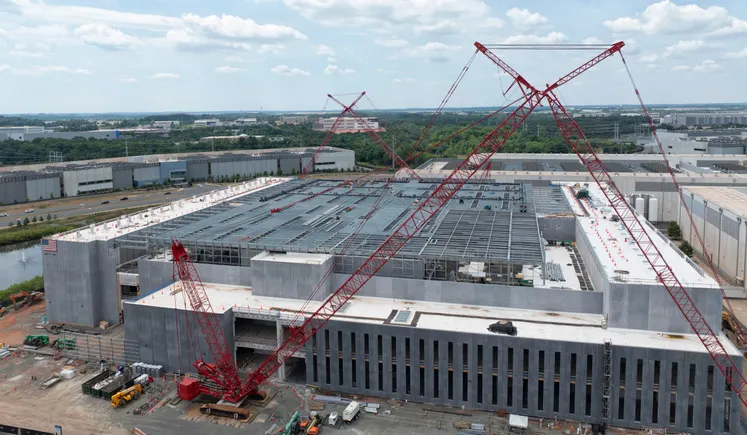
The construction industry has a problem. Despite decades of regulation, hard hats, and safety briefings, construction sites remain among the most hazardous workplaces on the planet. Falls from heights, falling objects, scaffolding collapses, and electrical hazards claim thousands of lives annually. Traditional safety training—lectures, videos, and static presentations—has proven inadequate for preparing workers for the dynamic, unpredictable reality of an active construction zone.
Enter the unlikely hero: game engines.
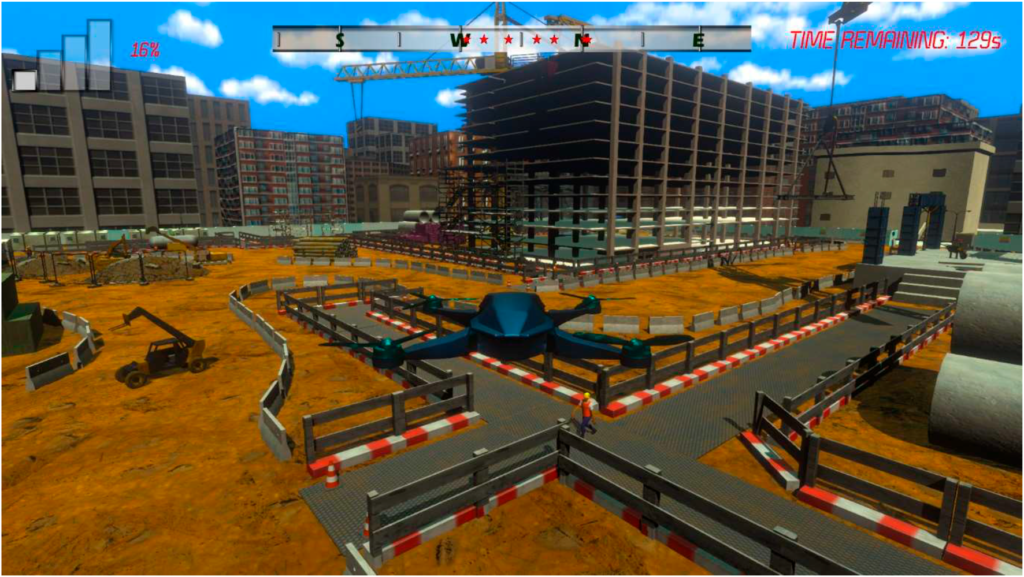
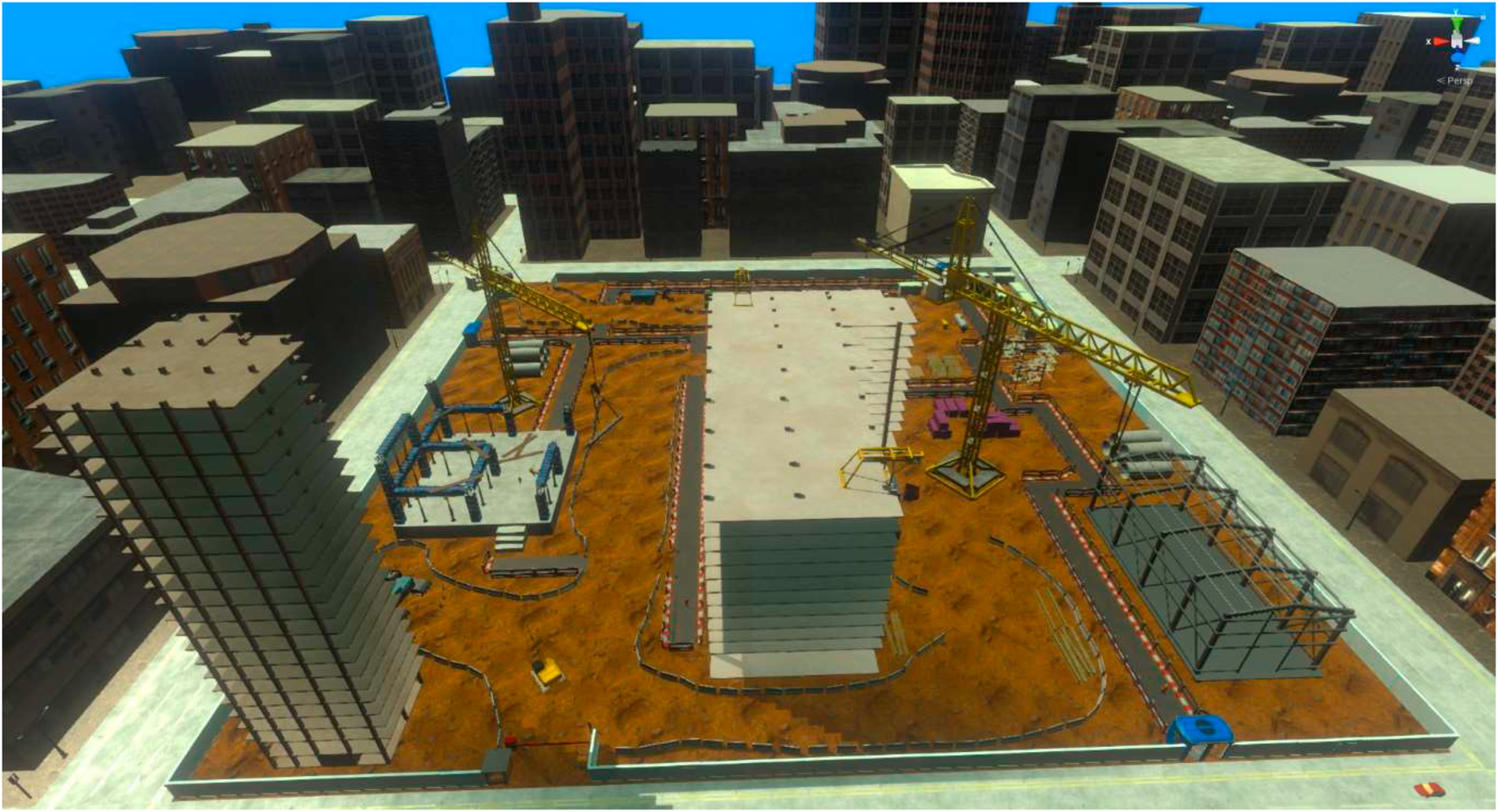
The same technology that powers blockbuster video games like Call of Duty and Fortnite is now being deployed to save lives on construction sites. Unity, Unreal Engine, and other real-time 3D platforms are creating immersive, interactive, and highly effective safety training environments. This approach, which we call “playable blueprints,” is revolutionizing how workers learn to spot hazards, respond to emergencies, and protect themselves and their colleagues.
In this article, we will explore how construction site safety training using game engines is moving beyond the chalkboard and into the metaverse of workplace protection.
Part 1: Why Traditional Training Fails
Before we celebrate the solution, we must understand the problem. Traditional construction safety training typically follows one of two models:
The Lecture Model: A safety officer stands before a room of tired workers, clicking through PowerPoint slides of OSHA regulations. Workers nod along, sign a form, and forget 90% of the content within a week.
The Video Model: Workers watch a generic safety video produced by a national organization. The video shows hazards that may or may not resemble their actual worksite. The examples are generic. The scenarios are sanitized. The impact is minimal.
Neither method addresses the core issue: hazard recognition is a skill that must be practiced in context, not memorized from a list.
Research confirms this gap. A 2025 study published in Built Environment Project and Asset Management found that interactive game-based learning significantly improves trainees’ ability to identify and understand site-specific hazards compared to traditional OSHA 30 training. Survey responses from both construction professionals and students rated game-based training as markedly more effective.
The reason is simple. You cannot teach someone to recognize the subtle signs of an unsafe scaffold by showing them a cartoon diagram. They need to walk around it, see it from every angle, and experience the consequences of failure—without actually falling.
Part 2: The Game Engine Solution – Building Virtual Hazard Zones
2.1 From Pixels to Peril: Creating Realistic Environments
Game engines excel at one thing above all others: creating immersive, interactive 3D worlds. When applied to safety training, this capability becomes a lifeline.
Modern construction safety simulations use two primary methods to build virtual environments:
Method One: BIM Integration
Building Information Modeling (BIM) software like Revit creates detailed 3D models of construction projects. These models can be exported directly into game engines like Unity. The result is a digital twin of the actual worksite—identical in layout, materials, and hazards.
Method Two: Photogrammetry
Researchers are now using UAVs (drones) to capture thousands of images of active construction sites. Specialized software stitches these images into high-fidelity 3D textured mesh models. When imported into a game engine, this creates a virtual environment that is virtually indistinguishable from the real site.
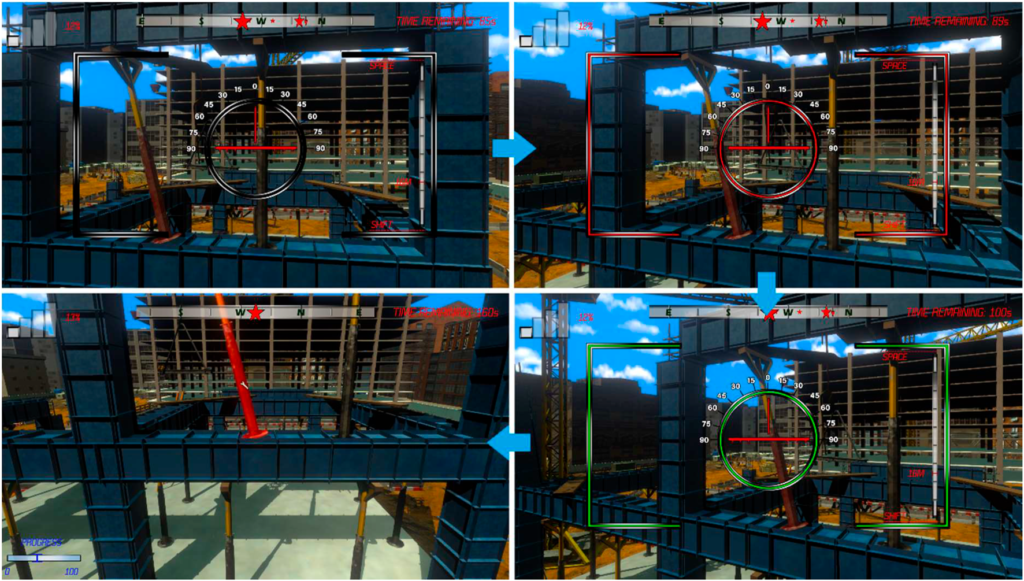
A 2024 study demonstrated this approach by creating a virtual construction environment featuring five critical hazardous components: floor edges, floor openings, wall openings, tops of walls, and ladders. Trainees could walk through the virtual building, and when they approached a hazard, the system would provide real-time warnings about required safety standards.
2.2 Learning by Failing Safely
The most powerful aspect of game engine training is the ability to fail safely. In the real world, misidentifying a hazard can be fatal. In a virtual environment, it triggers a learning moment.
Consider this scenario: A worker approaches an unguarded floor edge in a VR simulation. If they step too close, the simulation does not let them fall to their death. Instead, it pauses, highlights the hazard, and explains why fall protection is required. The worker then resets and tries again.
This trial-and-error learning is how human beings naturally acquire skills. Traditional training forbids error because error is dangerous. Game engine training embraces error as the ultimate teaching tool.
A 2025 doctoral thesis from the Technical University of Denmark developed a framework that uses an “energy-based metric” to measure safety behavior based on hazardous interactions rather than intentions. In other words, the system does not ask workers what they would do—it observes what they actually do in a realistic simulation and weights near-misses accordingly.
Part 3: Beyond Training – Real-Time Safety Management
The revolution does not stop at training videos. Game engines are being integrated into pre-construction safety management and real-time hazard monitoring.
3.1 Evacuation Modeling
Imagine a high-rise construction project. A fire breaks out on the 14th floor. Workers must evacuate immediately. But the stairwells are partially blocked by materials. Some exits are closer than others. The shortest path may not be the safest.
Using BIM data integrated with Unity, safety managers can simulate hundreds of evacuation scenarios before the first shovel breaks ground. They can identify bottlenecks, test signage placements, and optimize emergency routes. The same simulation can serve as a training platform for workers, allowing them to familiarize themselves with the facility and practice following the shortest evacuation paths from specific points.
3.2 Synthetic Data for AI Safety Monitoring
Game engines are also training the machines that will protect workers. Machine learning models that detect hazards in real-time—identifying workers without hard hats, detecting unsafe scaffolding, or spotting potential fall risks—require massive amounts of labeled training data.
Collecting this data from real construction sites is expensive, dangerous, and slow.
Synthetic data generation (SDG) using game engines offers a solution. Developers can create virtual construction sites, populate them with workers in various poses and conditions, and automatically generate perfectly labeled images. A 2024 comparative analysis of Unity 3D and Unreal Engine found that both platforms excel at creating high-fidelity interactive environments for training machine learning models in construction hazard recognition.
Part 4: Technical Deep Dive – Unity vs. Unreal for Safety Training
For safety managers and developers choosing a platform, the Unity vs. Unreal decision matters. Both are powerful, but they serve different needs.
Unity 3D
Strengths:
- User-friendly interface with C# scripting (widely taught in educational settings)
- Excellent for beginners and rapid prototyping
- Built-in perception package for automatic labeling in synthetic data generation
- Strong VR/AR support across multiple skill levels
Best For: Organizations new to game-based training, academic settings, and projects requiring rapid iteration.
Unreal Engine
Strengths:
- Superior graphical realism and advanced rendering capabilities
- Photorealistic textures ideal for high-end immersive experiences
- Blueprint visual scripting system (no traditional coding required, though it has a learning curve)
- Plugins like EasySynth and NDDS for synthetic data generation
Best For: High-fidelity simulations, projects where visual realism is critical, and teams with dedicated development resources.
A 2025 VR training kit developed using Unreal Engine 5.1 demonstrated the platform’s power, integrating biometric monitoring via heart rate sensors and real-time heat maps to track user navigation and hazard recognition patterns.
Part 5: The Human Element – Biometrics and Behavioral Insights
The most exciting frontier in game engine safety training is the integration of biometric and behavioral analytics.
A recent pilot study equipped construction workers with VR headsets and heart rate monitors while they navigated hazard-rich virtual environments. The system tracked:
- Navigation paths (where workers walked)
- Head movement and gaze (what they looked at)
- Heart rate fluctuations (stress responses to hazards)
The simulation, built in Unreal Engine 5.1, contained 25 induced hazards across a renovation site. Researchers could see precisely which hazards workers noticed, which they missed, and which triggered physiological stress responses. This data enabled personalized feedback, helping individual workers understand their blind spots.
Imagine a future where every construction worker receives customized safety training based on their actual visual attention patterns and stress responses. That future is already here.
Part 6: Case Studies in Action
Case Study 1: Scaffolding Failure Simulation
Researchers used Revit to model a construction site and Unity to simulate a real-life scaffolding failure accident. Workers could witness the collapse in a controlled virtual environment, understanding exactly what went wrong and how to prevent similar events. The simulation proved far more memorable than any safety manual.
Case Study 2: OSHA-Compliant Virtual Training
A 2025 study integrated UAV photogrammetry with game engine technology to create an interactive OSHA training platform. The simulation reflected the specific conditions and hazards of active construction sites, offering tailored safety instructions rather than generic advice. Validation surveys showed that trainees who used the game-based system demonstrated significantly better hazard recognition than those who completed traditional OSHA 30 training.
Part 7: Challenges and Future Directions
7.1 Current Limitations
Game engine training is not a magic bullet. Challenges include:
- Initial development costs (though dropping rapidly)
- Hardware requirements (VR headsets and capable PCs)
- Content creation time (building realistic environments takes expertise)
- User acceptance (some workers are intimidated by technology)
7.2 The Road Ahead
Future research is exploring:
Generative AI for scenario creation. Instead of manually building every training scenario, AI could generate endless variations automatically from unstructured safety knowledge. This would keep training fresh and adaptive.
Subject-free hazard prediction. AI models trained on construction site simulations could predict hazards, bottlenecks, and layout risks before any human sets foot on the site, evolving from training tools into decision-support systems for safety management.
Multi-user collaboration. Current simulations are often single-player. Future systems will allow entire crews to train together, practicing communication and coordination during emergency scenarios.
Conclusion: Building a Safer Future, One Frame at a Time
The construction industry has been slow to adopt digital innovation. But the safety crisis demands new solutions. Construction site safety training using game engines is not a futuristic fantasy—it is happening now, on job sites and in training centers around the world.
From BIM-integrated evacuation modeling to biometric VR simulations, game engines are transforming how workers learn to recognize hazards, respond to emergencies, and return home safely at the end of each day.
The cost of a life is incalculable. The cost of a game engine? Surprisingly affordable. The return on investment? Measured in survivors.
The blueprints are ready. The engine is running. It is time to play.
Frequently Asked Questions (FAQ)
How do game engines improve construction safety training?
Game engines create immersive, interactive 3D environments where workers can practice hazard recognition and emergency response without real-world risk. Studies show game-based training significantly improves hazard identification compared to traditional methods.
What is the difference between Unity and Unreal Engine for safety training?
Unity is more user-friendly with C# scripting, making it better for beginners and rapid development. Unreal Engine offers superior graphical realism but has a steeper learning curve. Both are effective for construction safety simulations.
Can game engine training replace traditional OSHA courses?
Current research suggests game-based training is a powerful complement to traditional methods, not a complete replacement. It excels at hazard recognition and contextual learning, while traditional courses cover regulations and administrative requirements.
What is synthetic data generation in construction safety?
Synthetic data generation uses game engines to create artificially generated images of construction hazards, which are used to train machine learning models for automated safety monitoring. This avoids the expense and danger of collecting real-world hazard data.
Is VR safety training affordable for small construction firms?
Costs are decreasing rapidly. While high-end Unreal Engine simulations require significant investment, Unity-based solutions and mobile-friendly VR options are becoming accessible to smaller operations. Several companies now offer subscription-based safety training platforms.
Call to Action (CTA)
Is your organization using game engines or VR for safety training? Share your experiences in the comments below. And if you are a safety manager interested in bringing playable blueprints to your site, start small—pilot a single hazard simulation and measure the results. The workers you save will thank you.