Combating AI Hallucinations: Strategies for Fact-Checking Generative Content
Combating AI Hallucinations: Strategies for Fact-Checking Generative Content, You ask an AI assistant for the key findings of a 2023 study on renewable energy adoption. It provides a detailed summary, complete with statistics, author names, and a publication date. The response is confident, well-structured, and entirely convincing.
There’s just one problem: the study doesn’t exist.
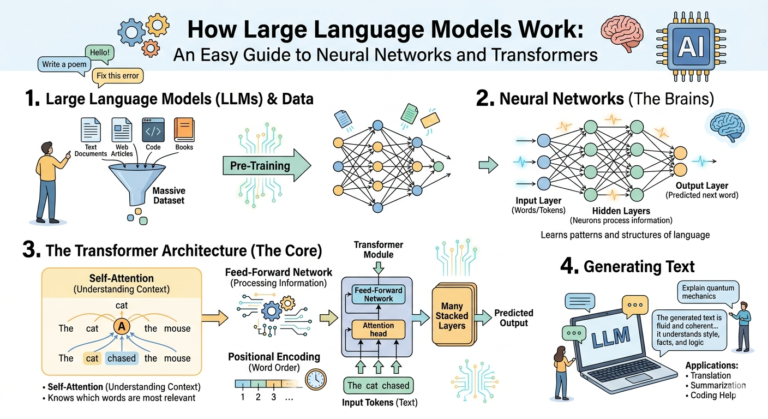
This scenario—encountered by countless professionals, students, and researchers—illustrates what AI developers call a hallucination. These are not lies in the human sense; AI models have no intent to deceive. Rather, hallucinations are the inevitable byproduct of how large language models work: they generate text by predicting sequences of tokens based on patterns learned during training, with no inherent mechanism for distinguishing fact from fiction.
In 2026, as AI systems have become deeply embedded in professional workflows, the ability to detect, verify, and correct hallucinations has become an essential skill. This guide provides a comprehensive framework for fact-checking AI-generated content, helping you harness the power of generative AI without falling victim to its confabulations.
What Are AI Hallucinations?
Understanding what hallucinations are—and why they happen—is the first step to combating them.
A Definition
AI hallucinations occur when a generative model produces output that is factually incorrect, nonsensical, or entirely fabricated while maintaining the appearance of confidence and coherence. These outputs may include:
- False facts: Citing studies, statistics, or historical events that never occurred
- Fabricated sources: Inventing authors, journal names, publication dates, or DOIs
- Logical inconsistencies: Contradicting earlier statements within the same response
- Confident uncertainty: Asserting false information with the same certainty as accurate information
Why Hallucinations Happen
Hallucinations are not bugs in the sense of coding errors. They are emergent properties of how language models work:
| Mechanism | Why It Causes Hallucinations |
|---|---|
| Pattern completion | Models complete patterns based on training data, even when the pattern leads to falsehoods |
| No fact database | Models don’t “know” facts; they generate plausible text sequences |
| No truth mechanism | There’s no internal process that distinguishes true statements from false ones |
| Confidence calibration | Models are trained to produce confident outputs regardless of actual accuracy |
| Out-of-distribution gaps | When asked about topics underrepresented in training data, models improvise |
Prevalence in 2026
Despite significant advances in model architecture and fine-tuning, hallucinations remain prevalent. Recent studies show:
- Major models hallucinate in 3-15% of responses, depending on the domain and query complexity
- Medical and legal queries have the highest hallucination rates (approaching 20% in some evaluations)
- Code generation shows the lowest hallucination rates (under 5% for simple tasks)
- Citation generation remains problematic, with 30-40% of AI-generated citations being partially or entirely fabricated
The improvements since 2023 are notable—hallucination rates have roughly halved—but the problem is far from solved .

Types of Hallucinations
Not all hallucinations are created equal. Understanding the different types helps tailor your verification approach.
Type 1: Factual Hallucinations
The model makes a verifiably false statement about the world.
Example: “The first human heart transplant was performed by Dr. Christiaan Barnard in 1978.”
Fact: The transplant occurred in 1967.
Type 2: Source Fabrication
The model invents citations, references, or attributions.
Example: “According to a 2025 study by Martinez et al. in the Journal of Cognitive Science, multitasking reduces productivity by 47%.”
Reality: No such study exists; the authors, journal, and statistic are fabricated.
Type 3: Logical Contradiction
The model makes inconsistent statements within the same response.
Example: “The population of Tokyo is 14 million… making it the world’s largest city with over 37 million residents in its metropolitan area.”
Contradiction: 14 million and 37 million are inconsistent unless the distinction is clearly explained.
Type 4: Misattribution
The model correctly identifies a fact but attributes it to the wrong source.
Example: “As Einstein wrote in his 1905 paper on special relativity, ‘Imagination is more important than knowledge.'”
Reality: Einstein likely never wrote this exact phrase in that paper; the quote is apocryphal.
Type 5: Overconfident Speculation
The model presents speculation or inference as established fact.
Example: “Based on current trends, quantum computing will replace classical computing by 2030.”
Reality: This is speculation, not established fact, presented without qualification.
Pre-Generation Strategies: Setting Up for Accuracy
The best time to prevent hallucinations is before they happen. Strategic prompting can significantly reduce the likelihood of fabricated content.
Use System Instructions to Set Expectations
Establish clear parameters for how the model should handle uncertainty and factuality.
Example System Prompt:
“You are a research assistant. Prioritize accuracy over comprehensiveness. If you are uncertain about a fact, state that you are uncertain rather than guessing. When providing citations, only include sources that you can verify actually exist. Distinguish clearly between established facts and your own analysis or speculation.”
Request Citations with Verification
Structure prompts to make verification easier:
Good: “Provide information about renewable energy adoption rates, citing specific sources with publication dates. Format as a bulleted list with sources at the end.”
Better: “Provide information about renewable energy adoption rates. For each claim, include a source with author, publication year, and a direct quote or paraphrase. After each source, add [VERIFY] so I know to check it.”
Limit Scope and Complexity
Narrow, specific queries produce more reliable results than broad, open-ended ones.
| Broad Query (Higher Risk) | Focused Query (Lower Risk) |
|---|---|
| “Tell me about climate change impacts” | “What were the three most significant climate change impacts reported in the IPCC 2023 synthesis report?” |
| “Explain quantum computing” | “Summarize the key findings of Google’s 2024 quantum supremacy paper” |

Ask for Confidence Levels
Request that the model indicate its certainty:
Prompt: “For each claim you make, rate your confidence on a scale of 1-5. For claims rated 1-3, explain why you’re uncertain. Only provide citations for claims rated 4-5.”
Use Retrieval-Augmented Generation (RAG)
When possible, use AI tools that incorporate retrieval-augmented generation. RAG systems first retrieve relevant documents from a trusted knowledge base, then generate responses grounded in those documents. This approach dramatically reduces hallucinations compared to pure generative models.
RAG-Compatible Tools:
- Perplexity AI (citations linked to web search)
- Microsoft Copilot (grounded in web and enterprise data)
- Google Gemini (with search grounding enabled)
- Custom RAG implementations using tools like LangChain or LlamaIndex
Real-Time Detection: Identifying Hallucinations as They Happen
Even with careful prompting, hallucinations will occur. Developing a detection mindset is essential.
The “Too Perfect” Signal
Hallucinations often present information that is suspiciously convenient—the perfect statistic, the ideal quote, the exactly relevant study. If a response seems too perfectly tailored to your query, verify it.
Red Flags to Watch For
| Signal | What to Check |
|---|---|
| Overly specific numbers | 47.3% instead of “about half” may indicate fabrication |
| Missing publication details | “A recent study found…” without specifics is a warning sign |
| Unfamiliar authors or journals | If you don’t recognize the source, verify it exists |
| Internal inconsistency | Check for contradictions within the response |
| Excessive confidence | Real research rarely claims 100% certainty |
The Cross-Model Check
Run the same query through multiple AI models and compare responses. If two models independently generate the same specific fact, it’s more likely to be accurate. If they diverge significantly, investigate further.
The Known-to-Unknown Ratio
Reliable responses typically have a high ratio of information you can verify from memory to information you cannot. If a response consists almost entirely of information outside your existing knowledge, approach it with heightened skepticism.
Post-Generation Verification: The Fact-Checking Protocol
When you have content that requires verification, follow this systematic protocol.
Step 1: Isolate Specific Claims
Break the AI response into individual factual claims. Each claim should be a discrete statement that can be verified independently.
Original AI Response:
“According to a 2024 study by Dr. Sarah Chen at Stanford University, employees who use AI assistants save an average of 4.2 hours per week, leading to a 15% increase in job satisfaction. The study, published in the Journal of Organizational Behavior, surveyed 1,200 knowledge workers across the United States.”
Isolated Claims:
- A study was conducted by Dr. Sarah Chen
- The study was conducted in 2024
- The study was conducted at Stanford University
- The study found employees using AI assistants save 4.2 hours/week
- The study found a 15% increase in job satisfaction
- The study was published in the Journal of Organizational Behavior
- The study surveyed 1,200 US knowledge workers
Step 2: Prioritize Verification Targets
Not all claims require equal verification effort. Prioritize based on:
| Priority | Claim Type | Example |
|---|---|---|
| Highest | Citation/source claims | Authors, journals, publication years |
| High | Specific statistics | Percentages, exact numbers, time frames |
| Medium | Causal claims | “X leads to Y” relationships |
| Low | Widely known facts | “The sky is blue” |
Step 3: Verify Citations First
AI models most frequently hallucinate entire sources. Always verify citations before trusting the content they support.
Verification Tools:
- Google Scholar: Search for author names + keywords + year
- PubMed: For biomedical and health-related research
- JSTOR: For humanities and social sciences
- Crossref: Search by DOI or metadata
- Institutional databases: Access through your library
Verification Protocol for Citations:
- Search for the author + topic + year in Google Scholar
- If no match, search for the journal name + volume/issue
- If still no match, search for key unique phrases from the “abstract”
- Consider the source fabricated if none of these searches yield results
Step 4: Cross-Reference Statistics
Statistical claims require particular scrutiny because they combine specificity with plausibility.
Techniques:
- Search for the statistic directly: “4.2 hours AI productivity gain” in Google
- Look for official sources: Government statistics, peer-reviewed papers, industry reports
- Check for methodological plausibility: Does the sample size and methodology make sense?
- Compare to known benchmarks: Does this statistic align with what you know about the domain?
Step 5: Validate Against Primary Sources
When possible, trace claims back to primary sources rather than relying on secondary summaries.
Source Hierarchy:
| Source Type | Reliability |
|---|---|
| Peer-reviewed primary research | Highest |
| Government or institutional data | High |
| Major news organizations | Medium-High |
| AI-generated summaries | Low (requires verification) |
| Unattributed web content | Lowest |
Step 6: Document Your Verification
Maintain records of what you’ve verified and how. This serves multiple purposes:
- Creates a chain of accountability for your work
- Helps identify patterns in the types of errors different tools make
- Provides evidence of due diligence if questions arise about your content
Domain-Specific Verification Strategies
Different fields require specialized verification approaches.
Medical and Health Information
Medical hallucinations carry particular risk. The 2025 study on AI chatbots for hearing-health information found that even when factual accuracy was acceptable, readability remained problematic with 68% of outputs reading at college level—far above recommended levels for patient education .
Medical Verification Protocol:
- Verify through PubMed or Cochrane Library
- Check for retractions (retracted papers remain in training data)
- Verify author credentials (are they legitimate experts?)
- Cross-reference with clinical guidelines from professional societies
- Consider consulting human experts for critical health information
Legal Information
Legal hallucinations can have serious consequences. In 2023, lawyers were sanctioned for submitting AI-generated briefs with fabricated cases. In 2026, the problem persists despite better tools.
Legal Verification Protocol:
- Verify all citations through Westlaw, LexisNexis, or official court databases
- Never rely on AI for case law without checking the actual opinion
- Verify statutes through official legislative websites
- Consult qualified legal professionals for legal advice
Scientific and Technical Information
Scientific hallucinations often involve fabricated papers, authors, or experimental results.
Scientific Verification Protocol:
- Verify papers through Google Scholar, Scopus, or Web of Science
- Check for retraction notices (especially for controversial topics)
- Verify author affiliations and publication history
- Look for citations in subsequent literature (fabricated papers aren’t cited)
- For experimental results, consider methodological plausibility
Business and Financial Information
Financial hallucinations can affect investment decisions and business strategy.
Business Verification Protocol:
- Verify financial data through SEC filings (EDGAR database)
- Check company information through official investor relations pages
- Verify market data through established sources (Bloomberg, Reuters, etc.)
- Cross-reference analyst reports from multiple sources
- Never rely on AI for investment decisions without professional verification
Building an AI Fact-Checking Workflow
For professionals who regularly use AI-generated content, a systematic workflow is essential.
The Four-Stage Workflow
Stage 1: Strategic Prompting
- Use system instructions that prioritize accuracy
- Request citations and confidence levels
- Narrow scope to specific, verifiable queries
- Use RAG-enabled tools when possible
Stage 2: Critical Reading
- Read with a skeptical mindset
- Flag potential red flags (overly specific numbers, missing sources, etc.)
- Identify individual claims for verification
- Note any internal inconsistencies
Stage 3: Systematic Verification
- Verify all citations first
- Cross-reference statistics and data
- Check methodological plausibility
- Document verification results
Stage 4: Revision and Refinement
- Remove unverified claims
- Revise to reflect verified information only
- Add appropriate qualifications and uncertainty language
- Maintain documentation of your verification process
Tools for Fact-Checking
| Tool | Best For |
|---|---|
| Google Scholar | Verifying academic citations |
| PubMed | Medical and life sciences research |
| Crossref | DOI verification |
| Snopes/FactCheck.org | Verifying viral claims and misinformation |
| Perplexity AI | Quick verification with citations |
| Scite | Checking how papers have been cited |
| Retraction Watch | Identifying retracted papers |
Time Investment Guidelines
| Content Criticality | Suggested Verification Time |
|---|---|
| Personal use, internal draft | 10-20% of generation time |
| Professional communication | 30-50% of generation time |
| Published content | 50-100% of generation time |
| Medical/legal/financial advice | 100-200% plus expert review |
Organizational Approaches to AI Hallucinations
For businesses and institutions, individual vigilance is not enough. Systemic approaches are needed.
Develop AI Usage Policies
Establish clear guidelines for AI use that address:
- Approved tools and use cases
- Mandatory verification requirements by content type
- Documentation standards
- Consequences for misuse
Implement Review Processes
For high-stakes content, require:
- Multiple rounds of verification
- Review by domain experts
- Documentation of verification steps
- Sign-off before publication or use
Provide Training
Ensure all employees understand:
- What hallucinations are and why they happen
- How to detect potential hallucinations
- Verification techniques for their domain
- When to escalate to human experts
Choose Tools Strategically
Different AI tools have different hallucination profiles:
| Tool | Hallucination Profile |
|---|---|
| Perplexity AI | Lower hallucination rate for factual queries due to search grounding |
| Claude | Better at acknowledging uncertainty; lower rate of confident fabrication |
| GPT-5 | Higher factual accuracy; still prone to source fabrication |
| Gemini 3 | Variable; improved with search grounding enabled |
| RAG systems | Lowest hallucination rate when built with quality knowledge bases |
Establish Verification Baselines
Before trusting AI outputs in a new domain, establish baselines:
- Run 50-100 test queries in the domain
- Verify every claim systematically
- Calculate your hallucination rate by category
- Adjust your trust level and verification effort accordingly
The Future: Reducing Hallucinations Through Technology
Hallucinations will likely never be eliminated entirely, but they are being reduced through multiple approaches.
Improved Model Architecture
Models in 2026 have significantly lower hallucination rates than their predecessors. Ongoing research focuses on:
- Better uncertainty calibration: Models that know when they don’t know
- Attention mechanisms: Improved focus on relevant context
- Multi-step reasoning: Breaking complex queries into verifiable steps
Retrieval-Augmented Generation
RAG has become standard for enterprise AI applications. By grounding responses in retrieved documents rather than relying solely on parametric knowledge, RAG systems reduce hallucinations by 50-80% in many domains.
Tool Use and Function Calling
Modern AI agents can use tools to verify facts in real-time—searching databases, checking calculations, retrieving documents. This reduces reliance on potentially hallucinated parametric knowledge.
Transparency Requirements
Regulatory pressure for AI transparency is increasing. The EU AI Act, UK government proposals, and other initiatives require disclosure of AI-generated content and, in some cases, transparency about training data and limitations.
Human-in-the-Loop Systems
The most reliable AI systems incorporate human verification at critical points. The 2026 enterprise AI landscape increasingly features:
- Human review before publication: AI generates; humans verify
- Exception flagging: AI flags uncertain outputs for human review
- Continuous feedback: Human corrections improve future performance
Conclusion: Trust, But Verify
AI hallucinations are not a sign of failure—they are an inevitable feature of generative models that prioritize fluent text over verified facts. The most sophisticated AI systems of 2026 still hallucinate, and they will continue to do so for the foreseeable future.
But this does not mean AI is unusable for fact-based work. It means that using AI effectively requires a new skill set: the ability to prompt strategically, detect potential hallucinations, verify systematically, and integrate AI outputs responsibly into your work.
The paradigm shift is straightforward: AI is not a source of truth; it is a source of plausible text that requires verification.
For those who master the skills of AI fact-checking, the productivity gains are extraordinary. AI can rapidly synthesize information, generate draft content, and surface connections that would take hours to find manually. But the final product—the content you publish, the analysis you present, the decisions you make—must be grounded in verified facts, not plausible fabrications.
As one legal scholar noted in the context of AI-generated legal briefs: “The technology is powerful, but the attorney is responsible.” This principle applies across domains. The AI can draft, but you are accountable for the content. The AI can suggest, but you must verify. The AI can accelerate your work, but it cannot substitute for your judgment.
Trust the AI to help you work faster. Verify to ensure you’re working accurately. The combination of AI efficiency and human diligence is the winning formula for the AI-augmented professional.