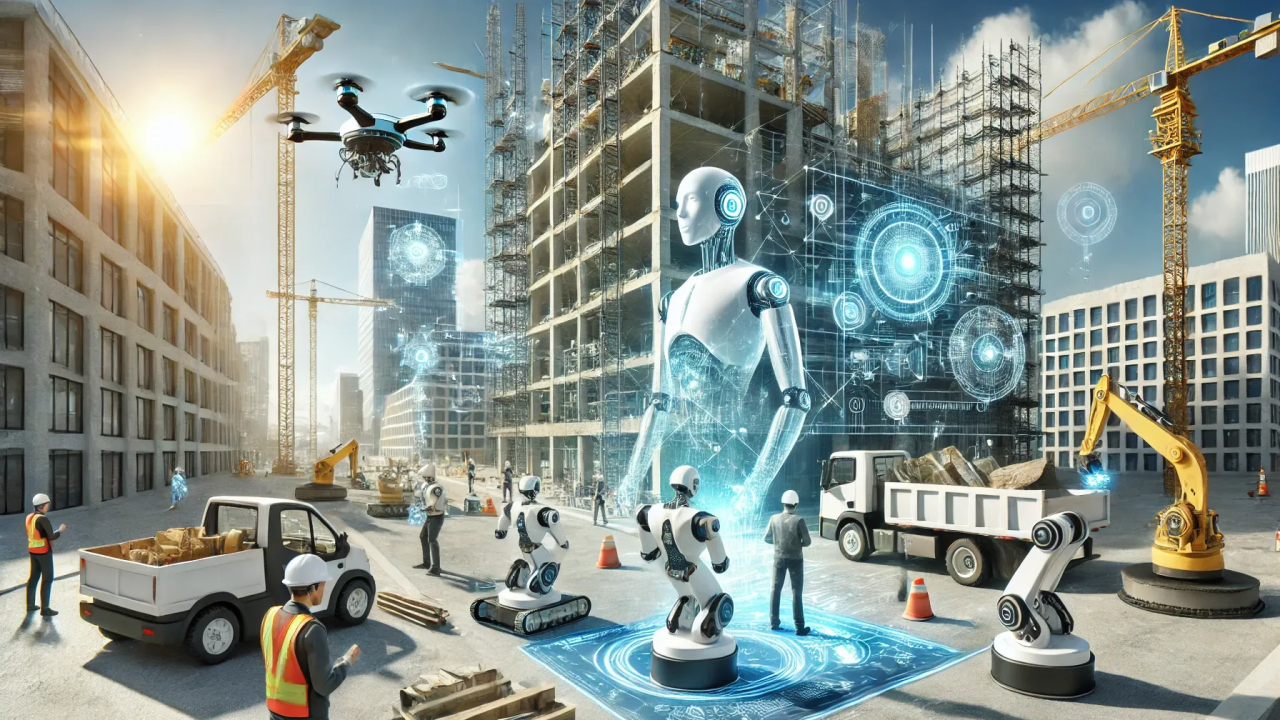
The Silicon Scaffold How AI is Building Our Cities and Our Games
The Silicon Scaffold How AI is Building Our Cities and Our Games: Explore how AI in urban planning and game design is revolutionizing the way we build real-world cities and virtual worlds. From traffic optimization to procedural generation, discover the silicon scaffold shaping our future.
Introduction: The Invisible Architect
What do a self-driving car navigating Manhattan and a procedurally generated dragon in Skyrim have in common? More than you might think.
Beneath the surface of our physical cities and our digital playgrounds, a silent revolution is underway. Artificial intelligence has become the invisible architect—the silicon scaffold—upon which both urban planners and game designers are building the future. Whether it’s optimizing traffic flow in Los Angeles or generating an infinite universe in No Man’s Sky, AI is not just a tool anymore. It is the foundation.
In this deep-dive article, we will explore how AI in urban planning and game design is reshaping two seemingly different worlds. We will examine the algorithms that route your morning commute, the neural networks that populate your favorite open-world games, and the shared challenges that connect civil engineers with game developers.
By the end, you will see your city—and your controller—differently.
Part 1: The Real City – AI in Urban Planning
1.1 Traffic, Transit, and Predictive Flow
For decades, urban planners relied on static models and historical data to design road networks. Those models were often wrong. Human behavior is chaotic. A single accident can ripple across an entire metropolis.
Enter AI.
Modern cities use machine learning algorithms to analyze real-time data from traffic cameras, GPS devices, and public transit sensors. These systems predict congestion before it happens, adjust traffic light timing on the fly, and reroute buses dynamically.
Case study: Pittsburgh’s adaptive traffic control. The city deployed an AI system called Surtrac that treats intersections as independent agents negotiating with one another. The result? A 25% reduction in travel times and a 40% drop in idle time at red lights. That is not just convenience. That is lower emissions, less frustration, and safer streets.
1.2 Generative Design for Sustainable Cities
AI does not just manage existing infrastructure—it helps design new ones. Generative design algorithms can produce thousands of urban layouts in minutes, optimizing for sunlight exposure, wind flow, energy efficiency, and pedestrian accessibility.
The Sidewalk Labs project in Toronto (though ultimately canceled) demonstrated what is possible. AI models analyzed how people moved through neighborhoods, where they lingered, and what spaces felt unsafe. The result was a proposed neighborhood designed not around cars or buildings, but around human behavior.
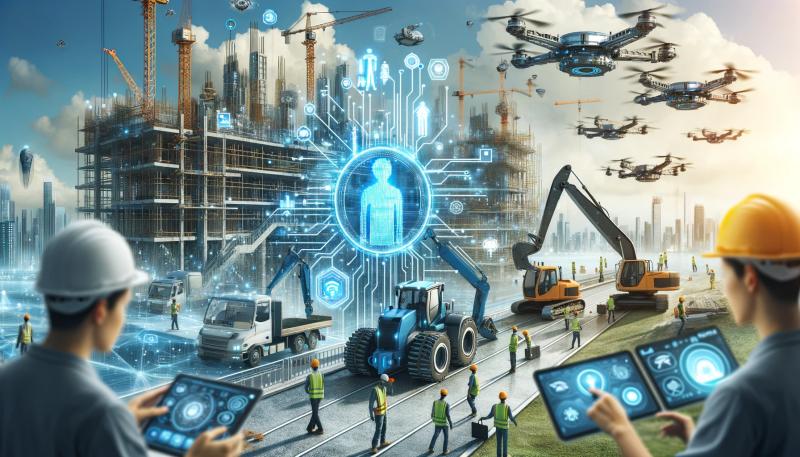
Even without ambitious mega-projects, cities like Barcelona and Singapore now use AI to decide where to plant trees (maximizing shade and air quality), where to install bike lanes (analyzing commuter desire paths), and where to build affordable housing (predicting gentrification pressures).
1.3 Disaster Response and Resilience
When a hurricane approaches Miami or an earthquake rattles Tokyo, every second counts. AI-powered predictive models can now forecast disaster impacts block by block. They incorporate building materials, population density, evacuation routes, and even social media sentiment to guide emergency responders.
During the 2023 wildfire season in California, AI systems analyzed satellite imagery in real time, predicting fire spread patterns hours faster than traditional models. Fire departments received updated risk maps every fifteen minutes. Lives were saved.
Part 2: The Virtual City – AI in Game Design
2.1 Procedural Generation: Infinite Worlds
If you have played Minecraft, No Man’s Sky, or Hades, you have experienced procedural content generation (PCG). These games use algorithms to create levels, landscapes, quests, and loot dynamically. No two playthroughs are exactly alike.
No Man’s Sky contains over 18 quintillion planets. No human designed them all. Instead, a deterministic algorithm generates entire solar systems on the fly, using mathematical seeds and rule sets. The AI decides where mountains rise, where oceans form, what creatures evolve, and what alien ruins appear.
The challenge is not just generation—it is meaningful generation. The AI must create spaces that feel intentional, not random. That is where machine learning enters the picture. Modern games train models on thousands of human-designed levels, then ask the AI to produce new ones that share the same pacing, difficulty curve, and aesthetic appeal.
2.2 Smarter NPCs: From Scripted to Sentient
Remember the guards in early Metal Gear Solid who walked the same path, said the same two lines, and forgot you existed after thirty seconds? Those days are ending.
AI-driven non-player characters (NPCs) now exhibit memory, emotion, and adaptability. In The Last of Us Part II, enemies call each other by name. When you kill a guard’s companion, they scream in grief, then adjust their tactics. They flank you. They flush you out. They retreat when terrified.
This is powered by behavior trees and utility-based AI. Instead of following a fixed script, NPCs evaluate hundreds of possible actions in real time, weighing their goals (survive, protect, attack) against the current situation. The result feels human—or terrifyingly close to it.
2.3 Dynamic Difficulty and Personalized Experiences
AI does not just build worlds. It watches you play.
Modern games use reinforcement learning to adjust difficulty on the fly. If you keep dying at a boss fight, the AI might subtly reduce the boss’s health or give you better item drops. If you are breezing through enemies, the AI might spawn additional threats.
This is not cheating. It is flow state engineering —keeping you in the sweet spot between boredom and frustration. Games like Resident Evil 4 (remake) and Left 4 Dead pioneered this approach, using an invisible “director” AI that controlled enemy spawns, item placements, and even music cues based on your performance.
Part 3: The Shared Scaffold – Common Algorithms
Here is where the story gets fascinating. Urban planners and game designers are solving the same problems with the same mathematical tools. They just use different names.
| Problem | Urban Planning Term | Game Design Term | Shared Algorithm |
|---|---|---|---|
| Pathfinding | Traffic routing | NPC navigation | A* search |
| Density optimization | Zoning | Level difficulty | Multi-objective optimization |
| Crowd simulation | Pedestrian flow | Mob behavior | Boids (flocking) |
| Resource allocation | Budget planning | Loot distribution | Markov decision processes |
Pathfinding is pathfinding. Whether you are guiding an ambulance through rush-hour traffic or a guard through a castle courtyard, the underlying algorithm—A* (A-star)—is identical. It finds the shortest, fastest, or safest route between two points, accounting for obstacles and priorities.
Crowd simulation is crowd simulation. The same “boids” algorithm that makes flocks of birds look realistic also models panicked crowds fleeing a burning stadium. Each individual follows three simple rules: avoid collisions, match velocity with neighbors, and stay near the center of the group. From those three rules emerges complex, lifelike behavior.
The silicon scaffold is not two scaffolds. It is one.
Part 4: Ethical Considerations and Future Risks
4.1 Bias in the Blueprint
AI is not neutral. It learns from data—and data carries the biases of its creators.
In urban planning, predictive policing algorithms have been shown to over-police minority neighborhoods, creating feedback loops that justify further surveillance. In game design, procedural generation can inadvertently reproduce stereotypes (e.g., all bandits being dark-skinned, all merchants being Asian).
The solution is not to abandon AI, but to audit it. Cities and studios must test their models for bias, diversify their training data, and build transparency into their algorithms.
4.2 The Loss of Human Touch
When AI designs a city, it optimizes for efficiency. But humans do not love efficiency. We love quirky bookstores, winding alleys, and parks with oddly shaped benches. An AI might pave over all of that.
Similarly, procedurally generated game worlds can feel soulless. No Man’s Sky was criticized at launch for its beautiful but empty planets. The algorithm could create mountains, but it could not create meaning.
The solution is human-AI collaboration. Let the AI handle the boring stuff—traffic patterns, loot tables, terrain generation—while humans focus on the soul: the narrative, the art, the unexpected beauty.
4.3 Surveillance and Privacy
Smart cities collect data. Lots of it. Cameras watching every intersection. Sensors tracking your phone’s Wi-Fi signal. AI analyzing your walking speed and shopping habits.
This is efficient. It is also dystopian.
Game designers face a milder version of the same problem. Telemetry data from millions of players helps studios balance weapons and fix bugs. But where is the line between improving the game and surveilling the player?
The industry has not yet found a good answer.
Conclusion: Building the Scaffold Together
AI in urban planning and game design is not a distant future. It is the present. You drive through AI-optimized intersections. You play on procedurally generated maps. You interact with NPCs that learn from your behavior.
The silicon scaffold is holding up both worlds. And it is getting stronger every year.
But the scaffold is not the building. AI cannot replace the city planner who fights for affordable housing. It cannot replace the game designer who crafts a story that makes you weep. It cannot care about beauty, justice, or joy.
That part is still human.
The future belongs not to AI alone, nor to humans alone. It belongs to those who learn to build together—algorithm and artist, sensor and soul, scaffolding and stained glass.
So the next time you catch a green wave of synchronized traffic lights, or discover a hidden cave in a procedurally generated forest, pause for a moment. Thank the silicon scaffold. And then remember: you are the one who decides where to go next.
Frequently Asked Questions (FAQ)
How is AI currently used in urban planning?
AI optimizes traffic flow, predicts disaster impacts, designs energy-efficient building layouts, and analyzes pedestrian movement to improve public spaces. Cities like Pittsburgh, Barcelona, and Singapore are leaders in this field.
What is procedural generation in video games?
Procedural generation is the algorithmic creation of game content—levels, maps, items, quests, or entire planets—rather than manual design by humans. Minecraft, No Man’s Sky, and Hades are famous examples.
Do game designers use the same AI algorithms as urban planners?
Yes. Pathfinding (A*), crowd simulation (boids), and resource allocation (Markov decision processes) are shared across both fields. The mathematics of moving agents through space is universal.
What are the ethical risks of AI in city planning?
Risks include algorithmic bias (over-policing minority neighborhoods), privacy violations (constant surveillance), and the loss of human-centric design (optimizing for efficiency over beauty).
Can AI replace human game designers?
No. AI excels at generating content at scale, but it lacks the emotional intelligence, cultural context, and creative intuition required for meaningful storytelling, art direction, and narrative design. The best results come from human-AI collaboration.
Call to Action (CTA)
Do you live in a “smart city”? Or have you played a game that surprised you with its AI behavior? Share your experiences in the comments below—we would love to hear how the silicon scaffold has touched your world. And if you found this article valuable, share it with an urban planner or a game developer. They might just recognize the shared language.