The Future of Generative AI: Navigating the 2026 Tech Landscape
The Future of Generative AI: Explore the definitive guide to the 2026 AI landscape. Learn about Agentic AI, multimodal models, and how to stay ahead in the age of automation.
The year 2026 marks a pivotal turning point in human history. We have moved beyond the “hype cycle” of early generative models and entered the era of Applied Artificial Intelligence. For creators, developers, and business owners, understanding this landscape is no longer optional—it is the baseline for survival in a digital-first economy.
In this comprehensive guide, we will explore the core pillars of the 2026 AI ecosystem, from the rise of Agentic Workflows to the ethical frameworks governing digital creation.
1. From Chatbots to Agents: The Rise of Autonomy
In 2024 and 2025, we “chatted” with AI. In 2026, we delegate to AI. The most significant shift in the current landscape is the transition from Large Language Models (LLMs) to Large Action Models (LAMs), or what the industry calls “Agentic AI.”
What is Agentic AI?
Unlike a standard chatbot that provides a text response, an AI Agent has the authority to execute tasks across multiple software platforms. If you ask a 2026 agent to “plan a business trip,” it doesn’t just suggest flights; it checks your calendar, books the tickets via API, sends the itinerary to your team, and drafts the initial out-of-office auto-reply.
Why This Matters for Your Business
For small business owners, Agentic AI represents a “Force Multiplier.” A single entrepreneur can now manage a level of complexity that previously required a staff of ten. The key to mastering this is understanding workflow orchestration—the ability to string multiple AI agents together to form an autonomous department.
2. Multimodal Mastery: The New Standard
In 2026, “AI” no longer refers strictly to text. We have reached Native Multimodality. Models like Gemini 3 and GPT-5.5 process text, audio, live video, and 3D spatial data simultaneously.
The Death of the “Prompt Window”
We are seeing the decline of the traditional text-box interface. With the proliferation of wearable AI (smart glasses and pin-based devices), the primary way we interact with AI is through Contextual Sight. The AI “sees” what you see through your camera and provides real-time audio feedback or augmented reality (AR) overlays.
- Real-time Translation: Breaking down language barriers during live physical meetings.
- Instant Technical Support: An AI looking at a broken engine and highlighting the specific bolt that needs tightening.
- Creative Composition: Photographers getting real-time lighting and framing suggestions based on cinematic history.
3. The Ethics of “Synthetic Media” and Digital Identity
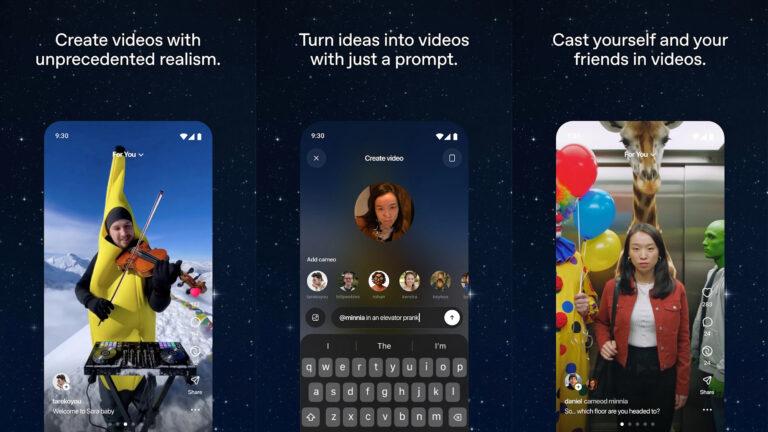
As AI-generated video (via Sora 2) and voice (via ElevenLabs v3) become indistinguishable from reality, the digital world is facing an identity crisis. This has led to the “Proof of Personhood” movement.
Navigating Copyright in 2026
The legal landscape has finally caught up with the tech. In most jurisdictions, purely AI-generated content cannot be copyrighted. However, content that demonstrates “Substantial Human Input”—where AI was used as a tool for a human-led creative vision—is now protected.
For creators on platforms like aitooltutorials.com, the focus must remain on the application of the tool. Being an “AI Artist” in 2026 is less about the prompt and more about the unique data, personal stories, and human editing that you bring to the final output.
4. The “Small Model” Revolution
While “Frontier Models” (the giants like GPT-5) continue to grow, 2026 is actually the year of the SLM (Small Language Model).
Why Smaller is Sometimes Better
Enterprises are moving away from massive, expensive, general-purpose AIs in favor of locally-hosted, specialized models.
- Privacy: Data never leaves the company’s local server.
- Latency: Instant responses without relying on a cloud connection.
- Cost: Running a 7B parameter model is significantly cheaper than calling a 1T parameter API.
This “Edge AI” movement means your smartphone, your car, and even your kitchen appliances now have “on-device” intelligence that doesn’t require an internet connection to function.
5. Strategic Integration: A Roadmap for 2026
To establish authority in this space, one must understand how to integrate these tools strategically rather than impulsively.
Step 1: Audit Your Cognitive Load
Identify the tasks that drain your mental energy but require low creative input. These are your first candidates for AI delegation (e.g., data entry, scheduling, initial drafting).
Step 2: Build a Private Knowledge Base
In 2026, the most valuable asset is Proprietary Data. By using tools like NotebookLM to “ground” an AI in your own unique business documents, research, and past successes, you create a “Custom AI” that knows your brand better than any general model ever could.
Step 3: Prioritize “Information Gain”
Google’s Search Generative Experience (SGE) in 2026 rewards content that provides new information. If you are writing about AI, don’t just summarize news. Provide:
- Case studies.
- Unique failure points you discovered.
- Comparison data from your own testing.
6. Comparison: The Major Players of 2026
| Category | Market Leader | Best For… |
| General Intelligence | OpenAI (GPT-5 series) | Complex reasoning and creative brainstorming. |
| Ecosystem Integration | Google (Gemini 3) | Seamless use across Docs, Sheets, and Android. |
| Privacy & Coding | Anthropic (Claude 4) | High-security environments and technical precision. |
| Open Source | Meta (Llama 4) | Developers building custom, locally-hosted apps. |
| Search & Citations | Perplexity AI | Real-time fact-checking and academic sourcing. |
7. The Human Element: Why You Won’t Be Replaced
The most common fear in 2026 remains job displacement. However, the data suggests a different story: AI is not replacing humans; humans using AI are replacing humans who don’t.
The “Human Premium” has actually increased. In a world flooded with synthetic content, people crave authenticity, empathy, and lived experience. Your value in the 2026 economy is your ability to “curate” AI outputs and apply a moral and aesthetic compass to the technology.
Conclusion: Emboldening the Next Generation of Creators
As we look toward the remainder of 2026, the goal of aitooltutorials.com is to demystify these powerful tools. We are moving toward a future where “coding” is done in natural language and “design” is done through conversation.
The barrier to entry has never been lower, but the ceiling for excellence has never been higher. By mastering the fundamentals outlined in this guide, you aren’t just using AI—you are leading the charge into the next era of human productivity.