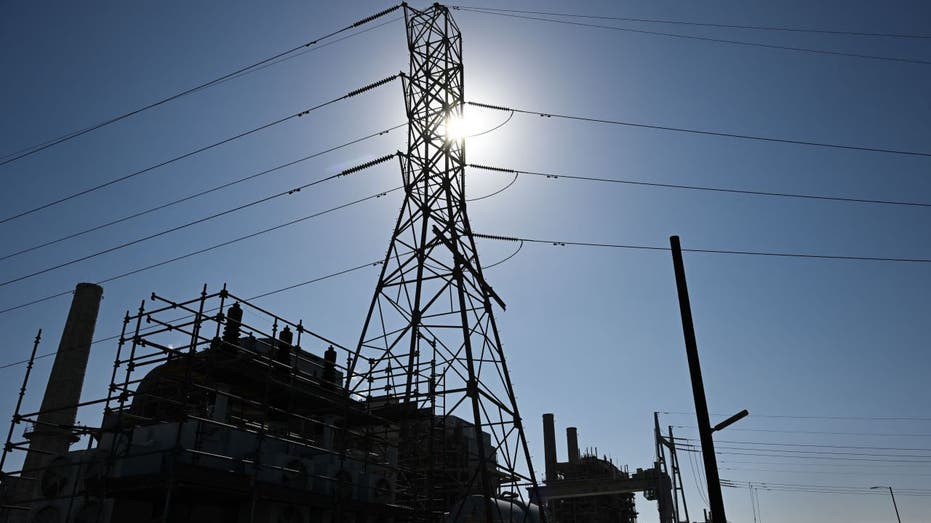
Why Tech Giants Are Rewriting the Global Energy Grid for AI
Tech giants are rewriting the global energy grid for AI with massive nuclear and renewable energy deals. Discover the $100B infrastructure upgrade reshaping power generation for data centers.
Introduction: The Grid Was Never Built for This
The lights have always come on. That was the assumption. The power grid—a sprawling, century-old network of wires, transformers, and power plants—was designed for steady, predictable demand. Factories opened at 8 AM. Homes turned on ovens at 6 PM. The system hummed along, manageable, forecastable.
Then came artificial intelligence.
Not the chatbots. Not the image generators. The infrastructure behind them—the massive data centers filled with thousands of GPUs running at full capacity, 24 hours a day, 7 days a week, consuming electricity like blast furnaces.
The grid was not built for this. And now, the world’s largest technology companies are spending over $100 billion to rebuild it .
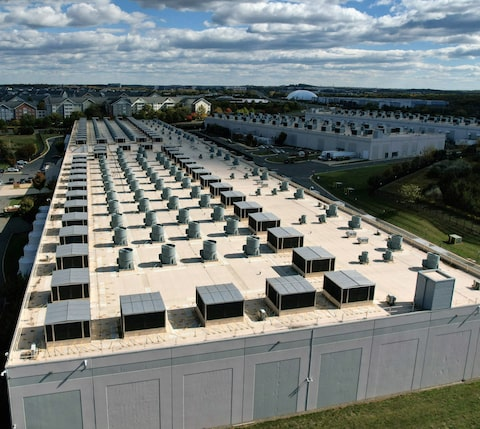
This article explores the massive infrastructure and nuclear energy deals reshaping global power generation, the unprecedented partnerships between Big Tech and utility operators, and what this means for the future of both AI and the energy grid.
Part 1: The Problem – AI’s Voracious Appetite for Power
1.1 The Numbers Are Staggering
The scale of AI-driven electricity demand is unprecedented in modern industrial history. According to BlackRock’s analysis, U.S. data centers consumed approximately 19 GW of power in 2025. By 2030, that figure is projected to reach 194 GW—a tenfold increase in just five years .
| Year | Data Center Power (GW) | Other Sectors (GW) |
|---|---|---|
| 2025 | 19 | 470 |
| 2026 | 63 | 450 |
| 2027 | 105 | 450 |
| 2028 | 141 | 460 |
| 2029 | 168 | 470 |
| 2030 | 194 | 470 |
*Source: BlackRock Fundamental Equities, data from U.S. EIA and Semianalysis *
The International Energy Agency (IEA) confirms this trajectory, projecting global data center electricity consumption will roughly double from 485 TWh in 2025 to 950 TWh in 2030—accounting for approximately 3% of global electricity demand by that date. AI-focused data centers are growing even faster, with electricity consumption tripling over the same period .
1.2 Why AI Is Different
Traditional data centers—the kind that host your email or Netflix queue—have variable demand. They idle at night. They spike during peak hours. AI data centers are fundamentally different. Training a large language model requires thousands of GPUs running at near 100% utilization for weeks or months at a time. Inference workloads, while more variable, still demand consistent, high-density power delivery .
The IEA notes that while energy efficiency per AI query has improved dramatically (dropping by an order of magnitude annually), new energy-intensive applications—video generation, reasoning models, agentic AI tasks—can consume hundreds or thousands of times more energy per query than simple text generation .
Part 2: The Nuclear Renaissance – Big Tech’s Unlikely Alliance
Faced with the impossible task of powering AI growth while meeting carbon reduction commitments, tech giants have made a surprising pivot. They are going all-in on nuclear power.
2.1 Meta’s Nuclear Blitz: 2.6 GW and Counting
In January 2026, Meta Platforms announced a landmark 20-year power purchase agreement (PPA) with Vistra Corp. for 2.6 GW of nuclear power from three of Vistra’s PJM grid assets: Perry, Davis-Besse, and Beaver Valley .
But Meta didn’t stop there. The company simultaneously signed agreements with nuclear innovators Oklo and TerraPower to support the development of next-generation small modular reactors (SMRs). For Oklo—backed by OpenAI CEO Sam Altman—this represented the company’s first major commercial contract, sending its stock surging over 17% .
As Wedbush analyst Dan Ives noted, these deals provide Oklo with “necessary funding from a commercial partner to advance power infrastructure construction” .
2.2 Microsoft’s Three Mile Island Revival
In perhaps the most symbolic move of the nuclear renaissance, Constellation Energy is restarting the Three Mile Island nuclear power plant in Pennsylvania, renaming it the Crane Clean Energy Center. The facility was shuttered in 2019. Microsoft has signed a 20-year PPA to purchase its entire output .
No fully shut down nuclear plant has ever been restarted in the United States. But the grid isn’t cooperating. Constellation executives revealed in March 2026 that grid operator PJM initially informed them the plant may not be able to connect until 2031—four years later than planned .
“We will have it ready to go in 2027,” Constellation’s David Dardis told Reuters. The company is actively negotiating with PJM and transmission owners to accelerate the timeline .
2.3 Amazon’s Nuclear Bet: $20 Billion in Pennsylvania
Amazon has been equally aggressive. The company announced a $20 billion investment in two data center complexes in Pennsylvania, including one directly adjacent to the Susquehanna nuclear power plant .
Amazon’s arrangement with Talen Energy—a “behind-the-meter” connection allowing the data center to draw power directly from the plant—has drawn federal scrutiny. The Federal Energy Regulatory Commission (FERC) is reviewing whether such arrangements are fair to other grid customers . Nevertheless, Amazon signed a 1.92 GW PPA with Talen at Susquehanna, with the deal expected to reach full capacity by 2032 .
Additionally, Amazon secured a 1.2 GW PPA with Vistra at its Comanche Peak nuclear facility .
2.4 Google’s Advanced Reactor Push: Kairos Power
Google has taken a different tack, focusing on advanced reactor technology. In April 2026, Kairos Power broke ground on the Hermes 2 Demonstration Plant in Oak Ridge, Tennessee—the company’s first deployment under its agreement with Google .
Hermes 2 will supply up to 50 MW of electricity to the Tennessee Valley Authority (TVA) grid, helping decarbonize Google data centers in Tennessee and Alabama. The reactor uses fluoride salt-cooled high-temperature reactor (KP-FHR) technology, incorporating TRISO coated particle fuel and molten fluoride salt coolant—designs that originated in Oak Ridge decades ago .
The project is notable for its iterative, modular approach. Kairos has built non-nuclear engineering test units (ETUs) to validate manufacturing methods before applying them to nuclear construction. Hermes 2 will be built using modular, factory-fabricated components—a method that could transform nuclear project delivery if successful .
Part 3: The Investment Thesis – Why This Changes Everything
3.1 The Capital Surge
The scale of capital deployment is breathtaking. The IEA reports that the five largest technology companies’ combined capital expenditure now exceeds global investment in oil and natural gas production .
Technology company capex jumped another 75% in 2026 after exceeding $400 billion in 2025. “AI factories”—cutting-edge data centers specifically designed for AI—have more than tripled in capacity over the past 18 months, according to IEA satellite tracking .
3.2 Two Paths to Nuclear Profits
As Nasdaq’s analysis outlines, investors have two distinct avenues to participate in this nuclear renaissance :
| Path | Model | Key Players | Risk Profile |
|---|---|---|---|
| Operators | Own and operate existing nuclear assets, signing long-term PPAs with tech giants | Vistra Corp., Constellation Energy | Lower risk; regulated, contracted revenue streams |
| Builders | Finance and develop next-generation reactors and restart dormant projects | Brookfield Asset Management (owns Westinghouse), Oklo, TerraPower, Kairos Power | Higher risk; project execution and regulatory hurdles |
3.3 The Financial Engineering
These 20-year PPAs with investment-grade technology companies fundamentally change the financial calculus for nuclear operators. Vistra, for example, has used its contracted revenue visibility to secure an investment-grade credit rating from Fitch in March 2026, despite carrying $19.6 billion in net debt .
Brookfield Asset Management is taking an even bolder step. In May 2026, the company announced a joint venture with The Nuclear Company to deploy Westinghouse AP1000 and AP300 reactor technology. Their first objective: evaluating the completion of the V.C. Summer Nuclear Units 2 and 3 in South Carolina—a project abandoned in 2017 due to cost overruns. Brookfield’s willingness to underwrite such a complex project signals immense confidence in the current regulatory and commercial landscape .
Part 4: The Bottlenecks – Why This Won’t Be Easy
4.1 The Grid Connection Problem
Even when power plants are ready, the grid often isn’t. Constellation’s Three Mile Island delay is not an isolated incident. Across the United States, interconnection queues are backlogged for years .
According to BlackRock, approximately 148 GW of additional power capacity will be needed by the end of the decade to satisfy data center demand—multiple times the 42 GW consumed in 2025 . But the grid wasn’t planned for this growth. Transmission lines, substations, and transformers take years to permit and construct.
4.2 Regulatory Uncertainty
FERC’s review of Amazon’s “behind-the-meter” arrangement at Susquehanna highlights the regulatory uncertainty surrounding these new power delivery models. The agency has expressed concerns about whether diverting power to higher-paying customers leaves enough for others and whether it’s fair to excuse big power users from paying for grid infrastructure .
A decision is expected in June or July 2026. The outcome will set a precedent for future data center-nuclear colocation arrangements .
4.3 The Equipment Supply Chain
Large power transformers now carry 128-week lead times. Generator step-up units take 144 weeks. The supply chain for heavy electrical equipment simply cannot scale fast enough to meet data center demand .
4.4 The Project Pipeline Reality
Not every announced GW will become operational GW. Sightline Climate estimates 30-50% of the 2026 data center capacity pipeline will miss schedule. The gap between “announced MW” and “buildable MW” is where margin leaks .
Part 5: What This Means for the Energy Grid’s Future
5.1 The Baseload Resurgence
For decades, the energy industry assumed baseload power plants—coal and nuclear—were dinosaurs, being replaced by intermittent renewables and natural gas peakers. AI has reversed that assumption.
Nuclear power’s defining characteristic—its ability to provide 24/7, weather-independent power—has suddenly become invaluable. As Bank of America’s metals strategist Michael Widmer notes, uranium prices could reach $130 per pound by the end of 2026 as demand surges .
5.2 New Reactor Technologies
The tech giants are not just buying existing nuclear power. They are underwriting the development of entirely new reactor technologies:
- Oklo is developing liquid metal-cooled fast reactors (SMRs)
- TerraPower (backed by Bill Gates) is advancing sodium-cooled fast reactors
- Kairos Power is deploying fluoride salt-cooled high-temperature reactors
- Westinghouse (owned by Brookfield) is offering AP1000 and AP300 pressurized water reactors
Each technology has different timelines, regulatory hurdles, and cost profiles. But all share a common feature: they are being funded, in part, by technology companies who need power more than they need short-term returns .
5.3 The Two-Avenue Investment Framework
As the Nasdaq analysis concludes, the nuclear renaissance has created two distinct investment opportunities :
- Operators (Vistra, Constellation, Talen): These companies own existing assets that can be contracted to tech giants at premium rates. Their risk is lower; their revenue visibility is high.
- Builders (Brookfield, Oklo, TerraPower, Kairos): These entities are financing and developing next-generation capacity. Their upside is larger; their risk includes project execution and regulatory delays.
Bank of America’s Global Research report describes the global nuclear development cycle as “strongly underpinned by the dual forces of soaring electricity demand and renewed policy support for carbon-free energy” .
Part 6: The Outlook – What to Expect Through 2030
6.1 Short-Term (2026-2027): Bottlenecks Persist
Grid interconnection delays, transformer shortages, and regulatory reviews will constrain near-term capacity additions. Projects announced today will face 2-4 year lead times .
6.2 Medium-Term (2028-2030): The Pipeline Unlocks
As transmission upgrades complete and new reactor designs receive regulatory approval, the project pipeline will accelerate. BlackRock expects data center power demand to reach 194 GW by 2030, with the nuclear share growing substantially .
6.3 Long-Term (2030+): A New Energy Paradigm
The IEA sees possible upside beyond 2030 as investments in relieving bottlenecks and rapid uptake of energy-intensive AI applications continue . The companies that secure power now will have a structural advantage in the AI arms race. The utilities that partner with them will be transformed.
BloombergNEF reports that capital expenditure estimates for the 14 largest public data center developers in FY2027 have climbed by 56% between August 2025 and February 2026. Active construction sites globally now number 831, with 23.1 GW of IT capacity under construction .
Conclusion: The Grid Is Being Rewritten
The $100 billion upgrade to the global energy grid is not about keeping the lights on. It is about powering the most energy-intensive technology in human history.
Tech giants are not passive customers of the energy industry. They are active partners, financiers, and, in some cases, developers. They are restarting shuttered nuclear plants. They are underwriting next-generation reactor technologies. They are signing 20-year contracts that provide the revenue certainty utilities need to invest in new capacity.
The grid that emerges by 2030 will look nothing like the grid of 2020. It will be more nuclear, more interconnected, and far more capable of handling the relentless, 24/7 demands of artificial intelligence.
The question is not whether this transformation will happen. The money is already moving. The concrete is already being poured.
The question is which companies—and which investors—will ride the wave.
Frequently Asked Questions (FAQ)
How much power do AI data centers consume?
U.S. data centers consumed approximately 19 GW in 2025 and are projected to reach 194 GW by 2030—a tenfold increase .
Which tech companies are buying nuclear power?
Meta (2.6 GW Vistra PPA + Oklo/TerraPower agreements), Microsoft (Three Mile Island restart), Amazon (Susquehanna + Comanche Peak PPAs), and Google (Kairos Power advanced reactors) .
What is an SMR (Small Modular Reactor)?
Small modular reactors are next-generation nuclear plants designed for factory fabrication and modular deployment. Companies like Oklo, TerraPower, and Kairos Power are developing SMRs with backing from tech giants .
Why is Three Mile Island being restarted?
Microsoft signed a 20-year PPA to purchase power from the shuttered plant, now renamed the Crane Clean Energy Center. It would be the first fully shut down nuclear plant to restart in U.S. history .
What is the biggest bottleneck to AI power deployment?
Grid interconnection delays. Constellation’s Three Mile Island restart was told it may not connect until 2031—four years after the plant will be ready. Transformer lead times exceed 128 weeks .
Is nuclear power the only solution?
No. Tech giants are also investing in solar, wind, and geothermal. But nuclear’s 24/7 baseload characteristics make it uniquely suited for AI data centers that run continuously .
Call to Action (CTA)
Are you following the AI-energy nexus? Share your perspective in the comments below. And if you found this analysis valuable, share it with a colleague tracking the infrastructure that will power the next decade of artificial intelligence.